Sunday, September 10, 2006

New Orleans


I know I promised in Barcelona pictures, but I wanted to put this up first.

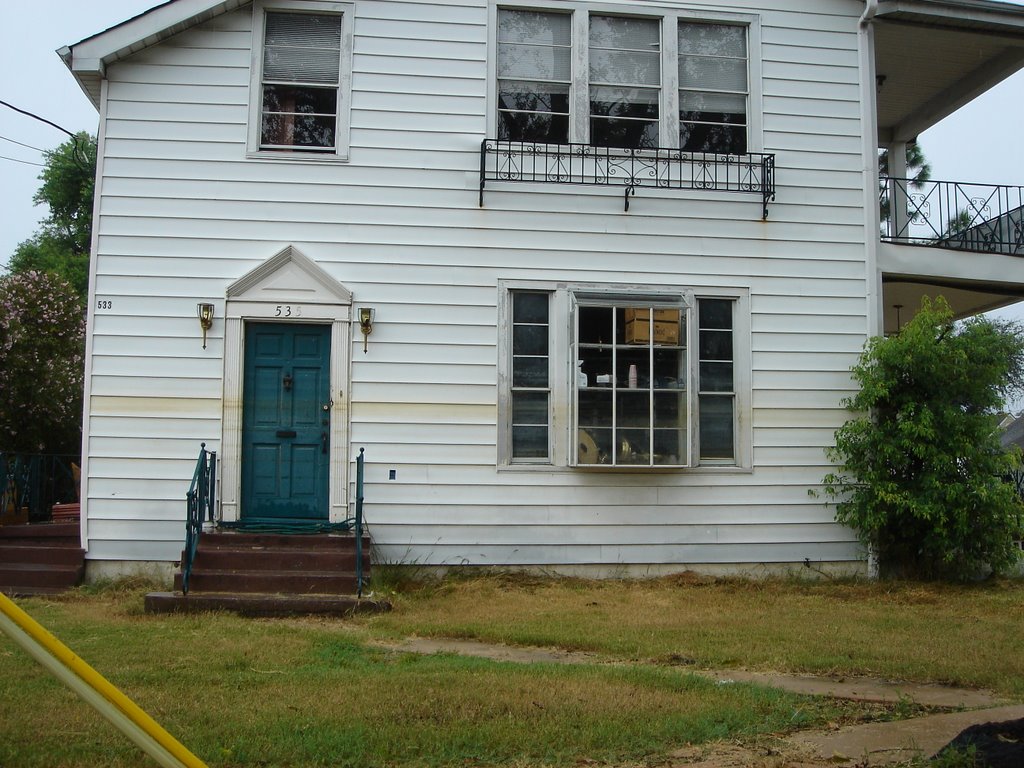
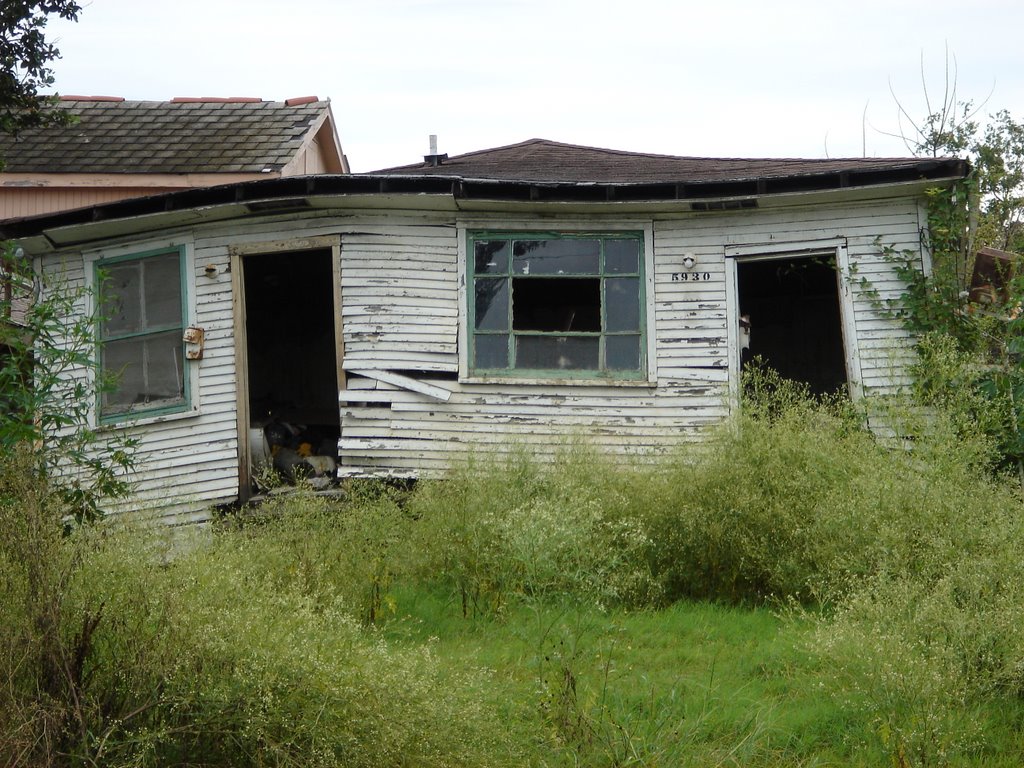
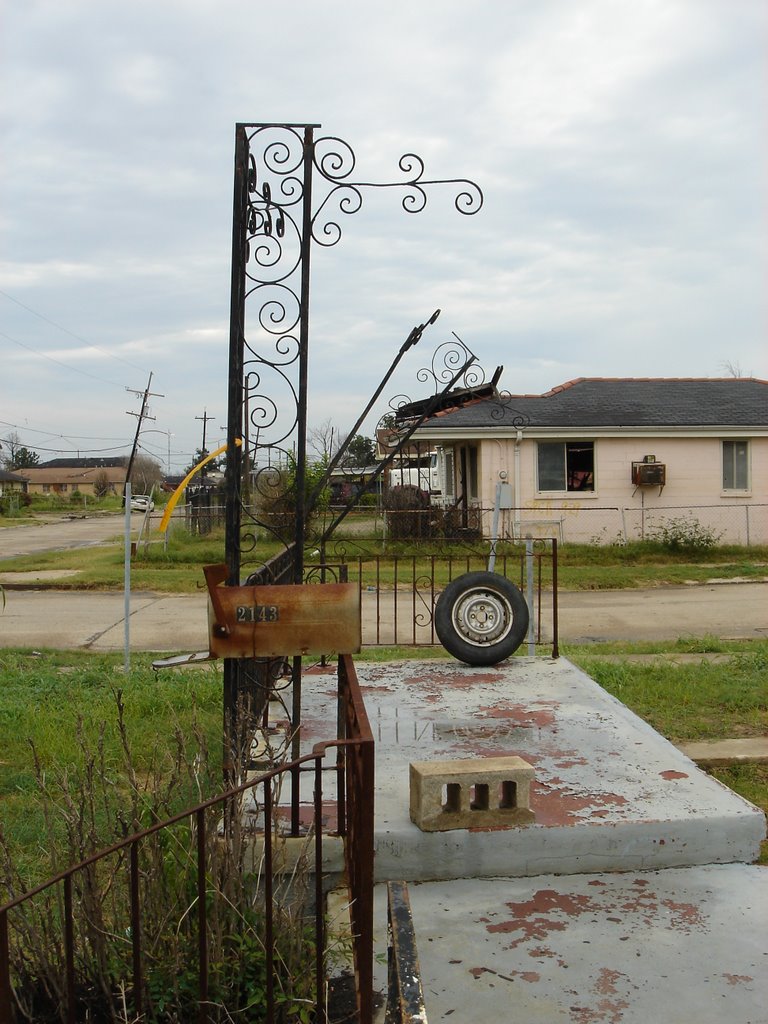
I drove down to New Orleans this weekend, with my little Sony camera. I drove around the city for about two hours taking video, just wanting to get a sense of what the city was really like today.

The good news is that most of the city, especially to the west, looks in good shape. Of course, that means that the video was completely dull, as it only showed rain, windshield wipers, and blurry houses going by.

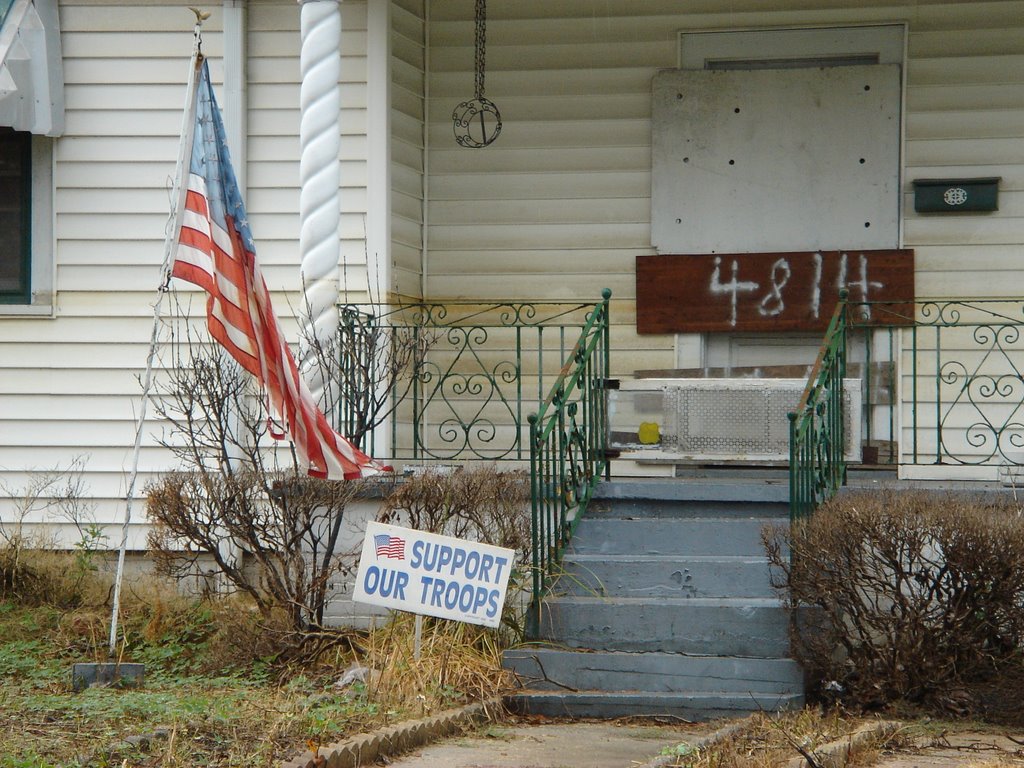
It was different in the east part of the city, and in the areas by the levees that broke. The video below doesn't really do justice, because in most areas things look sort of okay at first glance but much less so on further inspection. Blurry video from a car in the rain mostly only gives you that first glance. In the worst areas, I was able to slow down or stop, zoom in, and sometimes take photographs that give you a better picture of what it looks like.

I'll let the rest of this speak for itself.

My motel by Louis Armstrong Airport


Chef Menteur Avenue (Northeast New Orleans)


Franklin Avenue (Eastern New Orleans)


Community resentment on St. Claude Avenue (bordering Lower 9th Ward)


Lower 9th Ward (southwest end)


Lower 9th Ward (northwest end)


Lower 9th Ward (northwest end) - On foot


More photos (click to enlarge):


Friday, September 08, 2006

Circling the rim

So much to write, not because it is ready but because it overflows and will be lost. Warm soda volcanoing erupting on ice, spilling. Ice cream overhangs shading cone-sides, creaking.

Circling the rim, I gather up the following:

==============================

"There are people who don’t believe that art has any purpose in a war-torn world, but I suspect that the same people don’t believe it has any purpose on a peaceful world – except as a luxury item. When I think of Glyndebourne Opera, I think of how they put on a new opera, straight after the Second World War, as a reminder of what civilisation and culture actually mean. We hear a lot about fighting for civilisation and culture – strangely enough from the same people who have no time for art. Maybe one day they will join the dots…

...

Oh and listen to the proms and read a few poems. You will be arming your mind instead of arming the world. Me, I am going to do more of everything I love, and do it consciously, not least because time feels short and precious. Or as Mrs Winterson used to say, The Summer is Ended and We Are Not Yet Saved."

========================

"It’s a beautiful day, and there will be many days like this, I hope you are reading this on a day that shines. I love the sun more and more as I get older. I used to long for rain when I was younger, perhaps because it suited my solitary and romantic inclinations. It is true that I am still solitary and romantic, but I find that a spray can of Factor 30 does not get in the way of my thoughts anymore.

I used to think sunshine was a bit frivolous – now I know it is life.

Changing is good, letting in new sensations, feelings, new ideas, is necessary. I don’t want to slowly calcify, find myself like the inside of a dishwasher pipe – just enough room to let just enough water through. I want to keep the spaces open, and to find a way to make for room for difficult beauty – is beauty ever easy? I have not found it so. I’m not even talking about a person, just openness to everything, and even the small daily things, like going out into the garden, or walking down to the river, are beautiful enough to disturb.

Disturb? Yes, I mean to disturb out of the habit of letting life pass in a blur. Looking, hearing, feeling, is disturbing. But better, I think than a muffled world.

I put up a poem this month that seems to me to be about the essential practicality of the poetic vision. You don’t need to be a poet to have a poetic vision. A poetic vision is prepared to be open, to let things in. The exactness of translation, vision into language, is the job of a poet, but the vision itself is probably the job of all of us.

We are grateful to poets because they put into words what we have felt/are feeling. I can’t say enough how important it is to go on feeling.

This month’s poem makes the poet and his poem a thing of practical application. I have never believed that poetry is disconnected from the real world, or is a pretty adjunct to it.

I believe that poetry is a user’s manual – a way of defining what things matter, and, as Coleridge put it, ‘keeping the heart alive to love and beauty.’

Poetry is there when we need it, and we need it regularly. Simply, it turns ordinary life into a meditation, and it reminds us that meditation – the ability to settle and focus and concentrate our energies, is a necessary part of ordinary life.

The whiz-faster, flick-through, hurry-past, phone-in-one-hand-sandwich-in-the-other-got-no-time-for-anything in life is not life, which is why poetry rebukes it. Poetry is slow enough for breathing and blood flow. It prevents cardiac arrest, calcification, and is even good for the common cold."

==========================

Me, I'm trying to decide what to do this weekend, and I have about 2 hours to use the wisdom above to guide me. We'll see.

Monday, September 04, 2006

Safe and sound

Just a quick Hello to let everyone know that I'm back safe and sound. If I can find the special little gray USB cable then I will upload some pictures and videos from Spain, but for now it's on with the clothes washing and picking up the mail... oh the joys of returning from vacation.

Annette is well and lovely as always. Her next visit is six weeks.

Wednesday, August 23, 2006

Kaki King

Okay, I assume all of you know about khaki king (close enough I can't be bothered to add new words to the dictionary right now)... and that she has a new album now that came out the same day as Reprieve.

Anyway, I was just checking out her web site... she is on MySpace right now... and it turns out she does blogs on there

Blah blah blah anyway just read this

Sayonara

Well for a little while anyway... it's Wednesday night right now, and Thursday night it can be the last for quite awhile... almost 2 weeks.

I'll be flying out to London on Friday evening and on to Barcelona on Monday. Annette and I will be in Spain until Labor Day weekend which will be spent back in London. I'll be back hopefully with stories and pictures on Labor Day.

Monday, August 21, 2006

Watched pot

Speaking only for myself, I find that contemplating things -- whether one's own emotions or grand questions about the world -- has a lot to do with perspective. What I mean is,

It isn't so much that we got closer as that her face just got bigger and by the time it was taking up my whole view I figured my face had gotten bigger too

, there is a cost to transitioning between different states of mind. I guess in a way that is the point of meditation.

I don't need to tell you what this is about you just start on the inside and work your way out

Or perhaps it is better to say, or more accurate to say, that it is a question of focus. There is a difference between seeing and seeing... between hearing and listening... as we focus the blurry curves come into sharp jagged relief. Was today a good day or a bad day for me, for the world? The market was up, but actually it was up and down and up and down and up. Hitting refresh on the stock quotes is surfing the black-and-white pawns of the cable network O. J. JonBenet Osama bin Hussein tipping turning point men.

Maybe the point is the closer you are the more you see the less you see.

Maybe the point is you have to step back from yourself from the world from your hopes from your fears to see things clearly.

Or maybe -- this is what I thought at work earlier -- time is more precious than we think, and as we realize this we become more selective about the quality of how that time is spent.

If you don't have a point to make don't sweat it you make a sharp one being so kind.

And I'd sure appreciate it.

I wanted to quote something from a book that I have but it turns out that it's the wrong book and I can't find the quote now. What it was about was being realistic about how much time you have in the day, but you may think you have a lot the once you add up all the little things there isn't a whole lot of time left.

I don't think that's really the point, or least interesting one.

I talked to Tyson recently about the way we consume art and entertainment, sort of similar to what Angela was saying. And having quite a lot of free time on my hands here in Houston, I think a lot about how best to spend it.

And I also think back to discussions that I had with Katherine about balancing taking things in (for example reading) and producing things.

And in the context of blogging, I wonder if in an attempt to be constantly producing content, we fall prey to the same phenomenon at work in the news business... allowing the agenda to be dictated by the government and Hollywood.

Last night, I watched "All the Real Girls". It reminded me in a way of "Ruby in Paradise", one of my favorite films of all time. There is something that I love about films that aren't about anything. Not in a Seinfeld sort of way, but in a everyday life sort of way. Ghost World is another example. There's probably a sub genre name for this,...

In the past week a couple of times I've just stopped. Pulled into a parking lot, got out of the car, and just watched people. If you tune into it, the highs and lows of everyday life are a roller coaster.

Maybe we need the roller coaster, but we want it at a safe distance where we can get off whenever we want.

I don't know, I really don't. I think what I find the strangest of all, though, is thinking about Mary and MaryEtta, and about the simple contemplation of everyday beauty. That and its apparent contrast with the television echo chamber. That's not the strange part; I've always thought of that distinction as a distinction between the essential beauty of nature and the alienation of mankind from it. But living in the city, I can't help but look at the people scurrying around as much the same as the birds and squirrels and the cars and the steel and glass. Ugly, dramatic, glorious, simple. As David would say, man is nature.

And if that is so, how do you square the asphalt jungle with the Orwellian bread and Circus?

Oh the title, didn't really work that in. Arcade Fire. If you stare at something it gets bigger and bigger, but it doesn't go away when you stop looking. What are we supposed to look at? What we supposed to think about?

That's what I'm thinking about anyway.

Wednesday, August 16, 2006

Snap!

Random stuff today.

Every town I've lived in has left me with something that I miss once I move away. I have found myself wondering what it is that I will miss about Houston when I'm gone.

One is easy. Walking across the street into the grocery store, eating little samples of grapes, tomatoes, pineapple, pretzels, bread, and then walking out with a new kind of apple that I've never heard of before, a couple peaches, a big juicy tomato like I used to eat when I was a kid, some "alternative" bread that is overpriced but taste so good that I finally have to give in and buy some, a couple of bell peppers, some nice fizzy water, and a bag of ginger snaps.

What is better than ginger snaps? It is the small things in life, the small wonderful things, that make up for everything else.

Cease-fire in Israel and Lebanon... so now we can talk about immigration!

So here's the thing about immigration. There are two or three different issues mixed in together, and the lack of clarity about them means that far too much of our public discourse is based on emotional reactions rather than honest dialogue.

Let's see if we can list the issues. Or if I can.

Culture. Increasingly, the United States is becoming more Hispanic. There are more signs in Spanish, there is more Mexican food, more Latin music, etc. This cultural shift, like the rock 'n roll of our parents' generation, is something new/challenging/threatening depending on your perspective. I think the language is the main threatening part, since the dominant cultural shift before that was the hip-hop/rap black urban culture of the 80s and 90s that, while prompting some outcry against violence/sexism etc., rarely seems to have such a sharp political edge. For some people, this sense of not being able to understand what people around them are saying, or what the signs on the wall say, makes them feel that the places they have considered home are no longer "theirs".

The cultural question is probably the most difficult one, in the sense that it is difficult to imagine a practical scenario where the cultural shift described above can be avoided while this country remains committed to the public virtues it espouses. In that sense, there truly is no going back.

I think that this is the fundamental issue driving the passions and politics of the immigration debate. Because there is no "solution" to the issue, to other issues (one appealing to the left, another appealing to the right) become "cover issues" for the discussion. To be fair, some people genuinely are concerned mainly with these issues, and not the cultural one. Many others (I believe the majority) raise these issues not because they are concerned about them, but rather because they want to fight the cultural changes or -- interestingly enough -- because they want to embrace the cultural changes and feel that solving the cover issues will remove this socially acceptable excuses/reasons for opposing immigration.

I'm getting a bit ahead of myself, but I also think that this is the reason why immigration will prove such a difficult issue to address to everyone's satisfaction: because some people see problems and want to fix them, while others see the same problems as a convenient excuse for opposing immigration in general (and thus have no real desire to address the identified problems). Like in the Sudan (another post), if both sides don't really want to solve the problem, there's generally no solution.

The Cover Issues

Law and Order. As someone who has been through the immigration process, and has seen friends and loved ones do the same, it is undeniably frustrating to think of people who play by the rules and do without economic opportunities and suffer personal hardships while others cut in line. Speaking for myself, I get very frustrated when cars on the road drive down the shoulder to cut in ahead of others, and having lived in Britain only reinforced the sense of fair play that it is just not appropriate to feel that you are entitled to something that others have to wait for. The other example that seems emotionally relevant, though less obviously logically so, is remembering back in college spending all weekend working on a particularly difficult homework assignment, only to come in on Monday and find other people didn't do it because it was "too hard." ... and then the professor saying "oh, all right then, you can turn again on Wednesday." Stating it that way, a logical connection is more clear to me now: the existing immigration process may be terribly unfair, overly burdensome, etc., but there are people who are not in the United States and want to be (and in a fairer system they would be), and it is not fair to them that others get to live and work in the United States while they suffer. If we say that that is okay, we are basically saying that the people who wait in line, fill out the forms, wait patiently and suffer in silence are a bunch of suckers. In my ethical system that is wrong.

The compromise position on the "Law and Order" issue is to define a process of legalization. The tough part is that the "facts on the ground" are such that having everybody leave and stand in line (perhaps for some time) is unrealistic. It asks them to give up existing jobs, family relationships, housing, etc.. The cost is steep. The benefit -- legalization -- is only as valuable as the illegal immigrant views it to be. Presumably by virtue of the illegal status, legalization in and of itself will not be sufficient. Thus either the process must get easier or the penalties for illegal status must be harsher (not the penalties on the books, just the practical impact of illegal status in day-to-day life). If somebody wants to solve this problem, they would probably need to increase (significantly) the limits on legal immigration, improve how the immigration process handles the kinds of situations that drive illegal immigration (economic opportunities -- see below, family connections), and significantly increase enforcement of existing immigration laws especially targeting employers (as there is an economic incentive for employers to hire illegal workers).

This kind of package -- which could be characterized as immigration reform plus legalization plus stronger enforcement -- could address the way legal immigrants and employers of legal workers are currently treated unfairly, while addressing the needs/motivations of those currently living and working illegally in United States. The cost of this package would be forgiveness for those who jumped in line, and acknowledgment/acceptance of the existing pool of mostly low skilled workers currently working here illegally. Which leads us to...

Union Busting. Economics is all about supply and demand. Employers would like to hire workers at the cheapest rate possible. The cheapest rate can be obtained when there are more workers, especially if many of those workers cannot effectively negotiate as a group. In the past, white unions in the north were busted by bringing in nonunion "scab" black workers from the south, relying on the assumption that racism/perceived threat on the part of the white unions against their black coworkers would be sufficient to prevent those unions from absorbing the black workers. Again, the cover issue is one of numbers... as long as you can import more cheap labor, the existing labor will consider the new workers to be a threat to their standard of living. Yes, bringing those new workers into the union would dissipate most of the threat, but as these workers also represent a cultural threat, it is much easier to hope they will just go away. And thus is a union busted. Similarly, lots of jobs removed from the unionized north to the nonunion south. For the political left (especially union workers), the influx of foreign workers represent an economic threat. This is true even where the workers are not illegal (unions oppose the granting of H1B visas to skilled foreign computer workers). The influx of illegal non-Anglo Spanish-speaking foreign workers by the millions represents a real and tangible economic threat to the unions and their members.

The compromise position on the "Union Busting" issue is not obvious. If all the illegal foreign workers were kicked out, the economy would shrink. That doesn't mean there would be a depression, and it doesn't mean that the standard of living for blue-collar workers would go down. It would probably go up. But the "general welfare" would go down. If that is true, then the presence of millions of illegal low-wage workers in America is benefiting everyone except the people they are in competition for jobs with. If that is true, an "open borders" tax could be imposed that would capture some of the economic benefit, and be redistributed in a manner to be defined to workers in the kinds of jobs that are impacted. For example, the money could be used to extend unemployment benefits and provide education credits. That is not to say that the net impact can be made positive for workers in affected industries. It probably cannot, and thus it is unlikely that even such a program would be acceptable. Perhaps it was combined with greater union protections, safety regulations, and other government policies that are viewed as pro-worker, maybe then it would be palatable.

Thus, the Labor left and the Law and Order right have legitimate grievances against the current system, and against any solution that merely ratifies status quo and thereby encourages more of the same. Honest politicians, seeking to solve problems, would look at the needs of Business for the millions of workers currently employed, the needs of Labor for protection of the wages and conditions of workers, the needs of the country for an immigration system that rewards and encourages lawful behavior and respect for process, and the desires of the millions of foreigners to be with their families and to have a decent life, and looking at all of these needs would define an immigration system and workplace regulation scheme that supplies workers legally to businesses on terms favorable to existing legal workers; a stronger social safety net and greater economic hands up to existing low-wage workers; serious enforcement and penalties on employers and employees found to be violating the economic privileges being offered to each; and acceptance of existing illegal workers conditioned on practical legalization steps that acknowledge the mistrust and fragile economic conditions of many migrant workers and their families.

Congratulations if you've read this far. If it were possible to put together such a package, it would be interesting to see where people would come down. Personally I don't think such a package is something that can be put together at this stage in our political dialogue. More likely, individual proposals will come out from those trying to court either the Hispanic lobby or the Business lobby, which will attempt to address either the Law and Order issue or the Union Busting issue (not both). When these proposals come out, it will be understandable and right for those concerned with the opposite issue to object that the solution is incomplete. What will be more interesting is to see the splits that arise between those who wants to solve that particular problem, and those who want a polite way to say there are too many people speaking Spanish in America.

I do expect to see quite a lot of this, not because most politicians are interested in solving problems, but rather because the whole immigration (or illegal immigration) issue has become something of a coded discussion about our attitudes towards culture, work, and trade.

Finally, in the spirit of the Iraq tough choices blog, here are some questions you can ask those with simplistic positions on immigration:

If you are upset about the illegal nature of our immigrant population, if someone told you (truthfully) that everyone here had actually come in legally, would that address your concerns? Is it really how these immigrants got here, or who they are, that troubles you?

If you are upset about the impact of extra workers on the wages of American workers, are you willing to pay more for your house, your yard work, your cleaning, and any other "low skill" work that you purchase? Do you have similar objections to purchasing goods made with low-wage labor overseas? What moral basis makes workers seeking jobs from Alaska, Hawaii, Puerto Rico, Maine, Nebraska entitled to the jobs, while those workers in Canada and Baja California don't matter? Is there anything more noble than "I got mine, I don't want to share with you" at work?

If it is the increasing presence of Spanish culture in America that troubles you, how do you square that with the American mission of taking in immigrant populations from around the world (tired, huddled masses often not initially speaking English)? If you are part-Irish, or Scottish or Jewish or Polish, doesn't your heritage include your own language and your own past discrimination? Given how well-integrated Hispanics are in terms of Christian religion, political moderation, historic ties, aren't they well-suited to American life? And more specifically, if it is the Spanish language that is culturally threatening, do you think it is a good thing that given the America's power and visibility in the world that Americans are famously unable to understand other countries, cultures, and languages?

Anyway, that's what I think about immigration.

Especially Swedish immigration... I want an illegal Swedish immigrant to come live with me and make the fresh ginger snaps every morning. In the meantime, I'll just walk over to the grocery store and enjoy something about Houston, Texas.

Tuesday, August 01, 2006

Persecution complex


Meanwhile, all's well in Houston.

Thursday, July 27, 2006

Puzzle pieces

The good news, such as it is, is that there's a kind of clarity starting to come through (about Iraq if not the wider US foreign policy myopia). I like how this Newsweek commentary , while consistent with a lot of stuff I read and hear, manages to find the common thread between the two.

Wednesday, July 26, 2006

Healthy

as I was leaving Central Market a few minutes ago, it occurred to me that anyone reading this blog might think that I live on lean pockets and diet vanilla Pepsi's.

So in the interest of setting the record straight, here are the 33 items I've bought at the grocery store in the past couple weeks:

Berry water
Orange water
Coca-Cola zero
Pibb zero
Lean pockets meatball sub
Lean pockets ham and cheese
Lean pockets and egg and cheese

... okay, so I guess that's where you might get that idea. But wait, there's more!

Organic 1% milk
Instant oatmeal (yeah, well I'm lazy)
Viogner
Strawberries
Baby carrots
Apples
Tomatoes (rosso bruno)
Green peppers
Red plums
Broccoli
Bananas
Cherries
Ezekiel 4:9 organic biblical cereal (with a name like that you have to try it)
Unsalted pretzels
Miso soup
Blueberries
Baby carrots (gotta love 'em)
Apples
Tomato
Organic black plums
Black Russian bread
Mixed greens
Pineapple (whole)
More berry water
More orange water

So you see, it's actually pretty good, I just don't talk about the rest of it.

I'll let you know how the Ezekiel cereal is.

--- ---

Didn't get a chance to talk much about the whole Middle East thing while in Alabama. T was busy, and KP and I got waylaid discussing domestic politics at home. Oh well. It was good to see people, and the conversation was enjoyable.

Next time, I'll remember to bring the red.

Wednesday, July 19, 2006

Talking about talking

Every day at lunch, when I head off on my walk to Subway, I make a strangely deliberate choice about what topic my mind will gnaw on for the next 24 hours. At some times, my soundtrack is the latest downloaded album or some project I'm working on. Sometimes it's the Kojo Nnamdi show's Tech Tuesday. Or maybe it's the news of the day.

For the past week it's been the news of the day. And the news of the day, of course, has been Israel and Lebanon.

...

You know, I see what Katherine means about writing style versus reading style. I write much more formally than I speak. And when I'm doing these dictated blogs I've been trying to dictate the sort of things that I would normally type. And man, that's a pain in the and. Almost as much of a pain in the half as having to program profanity into this software.

So. Where was I? Ah yes. Pain in the ass.

That's better.

I guess there's a lesson in all of this about how tools and technology help dictate the form of art (or communication or media... call it what you will). But that's not this blog.

I want to write something about Israel and Lebanon. I have the sense of what it will be, just like I had a sense of what the immigration blog would be. But in a way the immigration one would be easy because, though I'm not sure I can articulate it, and I'm not sure what decisions I would make if I were in position to do so, I do feel like I've got my facts straight and I see pretty clearly the tension between the competing goods that is almost always at the heart of really difficult issues. Like I said in one of the blogs from a couple weeks ago, the difficulties are technical ones not moral ones.

Israel-Lebanon is more cloudy to me. All the normal platitudes apply... there's plenty of blame to go around, we need a compromise, etc..

...

Aside: another --- much less serious --- thing I've been thinking about is Tone. Specifically, I read two kinds of things every day: serious news and comparatively light hearted blog banter. Maybe it comes from years of writing at work, but when I write I usually write like I'm putting together a position paper for management. Or maybe a serious news analysis for an editorial page. The lighthearted blog banter doesn't flow from my fingers. But in some way, I'd like to have more of that here.

...

What made me think about that is that while on one level my mind is doing this analysis of Israel foreign-policy, on another level I'm thinking "how in the hell do all these people have such strong conviction about what should be done in the Middle East? It reminds me of the mid-level managers in a Dilbert corporation to excommunicate all the devilish details from the slamdunk PowerPoint so that they can maintain a clarity of vision unencumbered by that inconvenient thing that the rest of us call 'reality'."

And hence the whole Tone thing... you talk about the problem, or do you talk about the way people talk about the problem?

I'm hoping that in some Jackson Pollock sort of way this gradually starts to make sense.

So the thing that is striking to me... (okay here's this writing versus speaking thing again: while I'm thinking about what is striking to me, I'm also examining why the oversimplification... wrong word but there isn't a word for the right word... of the Israeli-Lebanese situation is important enough to me to become the de facto subject of the blog... and realizing why, the speaking me considers that detour fair game... but for now will demur)... the thing that is striking me is how those with expertise in this subject portray a fiendishly complex game of Pick-Up Sticks where everyone acts rationally in the pursuit of their own interests, the politicians but even more so the talking heads (and here's a clue: the public) boil it down to a bumper sticker.

Full disclosure: I've said in the past that if you can't put it on a bumper sticker, you don't really understand the problem. And you know what, I don't really understand the problem. But for everyone who thinks they do, I'm at a total loss as to how they got there.

Anyone see the connection between the immigration comments above and this? I did give a clue...

Making public comments about something that you don't fully understand, where you don't feel knowledgeable enough to pass moral judgment on those involved, doing so in an environment where most people seem to have passed moral judgment within 24 hours... well, that makes me nervous.

So rather than talking about the problem, I talk about talking about the problem.

Barring any unexpected responsibilities from work this week, I think I'm headed to Alabama. Sounds like Katherine might be coming. I'm sure my parents will have opinion about this. Tyson too. And then there's the two 8-hour drives.

I hope everyone has their talking caps on. I'll bring the drinks.

I look forward, nervously, to moving towards clarity.

Friday, July 14, 2006

Arctic Monkeys

In case you didn't know. The lead singer has a Jake Gyllenhaal thing going on, don't ya think?


and one for Charles


and the famous one

Thursday, July 13, 2006

the Iran one

I promise something lighter soon...

============================

I keep wanting to write a blog about immigration... I mean a thoughtful blog at least. That's the thing about the Middle East; it has a habit of not staying quiet when you want it to.

So this one's about Iran.

If you Google Iran, you'll probably see a lot of stories about their nuclear program. That's the wrong story. Now, I'm not exactly sure what the right story is, but I am willing to give it a try. Here goes.

First of all, I've never been to Iran. I don't know that much about it. Annette told me that young women in Iran go nightclubbing with Western men in full burkas. The women I mean. So this is just what I hear.

I hear Israel invaded Lebanon today. Well maybe yesterday. You may have heard that too. I also hear that Iraq is getting worse. I mean, like worse worse. Coincidence?

Well, no. Israel is pissed that three of its soldiers have been captured. Lots more were killed, but as we all have seen, captives make better television than dead bodies.

Let's review the Israeli geography. Israel is bordered by Jordan on the east, Egypt on the south, the Mediterranean Sea on the west, and Lebanon on the north. There are three areas of contested land, one bordering each of these countries. The border with Egypt has the Gaza Strip. If I recall correctly, Israel has pretty much gotten out of there (or at least gotten their troops out of there). The border to the east with Jordan is the West Bank. Much much bigger area. Very contentious. The border to the north with Lebanon has the Golan Heights.

OK. Israel took the West Bank (like the others) after a war back in, oh I don't know, the 50s or 60s. Israel is kind of overcrowded, so once they had the land it was like this big new subdivision. I assume that land had been Jordan's, at least looking at the map. It sure as heck wasn't Israel's though. Everybody has known all along that Israel has to give most if not all of that land back if it wants to live in peace with its neighbors. Not to mention the fact that most of the people living there are Palestinian, not Jewish, so there's this whole growing political bloc that the Israeli government realizes it needs to re-district out of Israel. Most Israelis seem willing to give most of the land back, but they'd like to get something for it. You might think that the promise of peace would be good enough, but given that Israel had been attacked by its Arab neighbors not long after its Jewish people had been attacked by their European governments, it is understandably paranoid. After all, once given up, land is harder to take back than a promise.

For the past few decades, Israel has alternated between a "let's hit back harder than them" and a "let's make a deal with them" strategy. Hitting back hard had the benefit of changing facts on the ground in Israel's favor, but resulted in international isolation, and ultimately did little to advance the cause of peace. Call it a tough negotiating stance for an eventual peace. On the other hand, making a deal was contingent upon a willingness of those fighting Israel to stop fighting. Let's divide those fighters into three groups. One group demands the total destruction of Israel (more on them later). Another group would be willing to stop fighting if Israel gives everything back --- lands, prisoners, etc.. The remaining group just wants peace. The problem with making a deal was that Israel didn't want to give everything back, so any deal would be contingent on the third group controlling the first two. Even if Israel were willing to give everything back, it's not clear whether that first group could be controlled... and this of course has been Israel's excuse. The failure of Yasser Arafat to sign off on the deal President Clinton negotiated with Yitzhak Rabin reinforced the view that the Palestinians (and their backers) were, as Israeli conservatives had been, more interested in changing facts on the ground through force than in making a deal.

Israelis, believing that the Palestinians could neither be reasoned with nor beaten into submission, supported a third approach championed by Ariel Sharon, who had to start a new political party to enact it. The new approach can be thought of as an unnegotiated settlement. Recognizing they would not get a promise of peace, and recognizing they had to give most of the land back, they decided to build a wall with most of the land on the other side of it. The wall thereby replaced a promise with something more tangible.

What about the Palestinians? International efforts to broker a peace had resulted in significant inflows of money to the Palestinian Authority. With guaranteed money, a righteous political/military banner to wrap around themselves, and little actual dependence on the people they represented, the Palestinian Authority was increasingly corrupt. Hamas, a military/social/religious Palestinian organization, was by contrast effective at delivering services to the people. The Israeli "go it alone" approach to peace further diminished the stature of the existing government. Under Western pressure to democratize, elections for leadership of the Palestinian Authority resulted in Hamas rising to power. The problem of course is that Hamas, when they're not feeding the poor, likes to blow things up in Israel.

Iran? I'm getting to that, hold your horses.

Now, the previous Palestinian leadership (Fatah) had been funded by all those countries around the world that wanted peace in the Middle East. Where does Hamas get its money? Syria. Funding Hamas allows Syria to both burnish its image in the Muslim world by helping take care of the poor in Palestine, while exerting military pressure on Israel without having to actually go to war. In fact, it seems that the kidnapping by Hamas of an Israeli soldier a week or two ago was not carried out by the "local" Hamas militants (who after all are part of the government now), but rather by a Syrian-sponsored Hamas faction.

You see, peace between Israel and the Palestinians isn't necessarily in Syria's interest. Remember that one.

Iran? Yeah yeah I'm getting there.

So Hamas in Israel comes into power and starts getting all moderate, talking about peace. So Syrian Hamas kidnapped an Israeli soldier, and asks for Palestinian prisoners to be released in exchange. Israel will do the exchange, they have in the past, but in order to discourage future kidnappings and make the exchange palatable with the Israeli public, they have to blow a hell of a lot of stuff up first. The net effect? A deterioration of the peace process.

Meanwhile to the north of Israel, Hezbollah (oh thank God that's in the voice-recognition dictionary) sits in the south of Lebanon and shoots rockets over the border. Fortunately for all involved, the rockets don't go very farand there's not much worth hitting in northern Israel. Like Hamas, Hezbollah is a religious/military/social organization that is part of the Lebanese government. Like Fatah, the Lebanese government is generally pro-Western (as these things go). Also like Fatah, they are quite corrupt. I get the sense that the previous Syrian puppet government was also a corrupt, but when Syria assassinated the anti-Syrian opposition leader, they got kicked out. Anyway, again you have a relatively pro-Western corrupt government talking peace and a hard-working externally-funded militant Islamic group vying for power.

Where Hamas is an increasingly but by no means completely detached arm of Syria, Hezbollah is a highly integrated arm of the Iran (see, I told you we get here!). Iran sees Syria use Hamas to kidnap an Israeli soldier and upset the peace process (or to be fair, upset the status quo). So what do they do? Hezbollah kidnaps 2 Israeli soldiers!

When Hamas did its kidnapping, Israel buzzed jets over the home of Syrian President Bashir Asad, and blew up bridges at the southern end of the Gaza Strip effectively sealing off the border with the Egypt (to trap the kidnappers and the soldier in the Israeli controlled territory).

Unlike Syria, Iran has a proper army. Israel isn't going to buzz the palace of the Iranian President (whose name almost certainly is not in the voice-recognition dictionary, but sounds a lot like "Mach mood I. Modena shot"). And unlike Hamas, the Hezbollah party in power in Lebanon really is of the "wipe Israel off the face of the map" persuasion. So when Hezbollah kidnaps an Israeli soldier, Israel goes after Hezbollah. Which is to say, Israel goes after Lebanon.

Today this took the form of Israel blockading Lebanon in the Mediterranean Sea, bombing all the runways at the Beirut airport, and blowing up the highway to Damascus, Syria. Oh I left something out: amidst all this, Hezbollah found some bigger rockets and landed one in the Israeli city of Haifa. Now, the Lebanese government (including the Hezbollah politicians) say they aren't responsible for the kidnappings or the rockets, but lacking better targets Israel isn't splitting hairs.

This overreaction by Israel is calculated. Israel is already despised by most of the world (outside the United States), while Lebanon is kind of popular. Furthermore, they are very dependent on tourism and sure as heck can't afford a war. So Israel's calculation is that the political classes in Lebanon, while always happy to see Israel punished, will form a backlash against Hezbollah for going off on their own and trying to start a war with Israel.

Why is all this important? Well, just as Syria is motivated to undermine the peace process in Israel to maintain their influence in the Hamas organization and more generally in the region, Iran also has its reasons for wanting to see the conflict continue.

I always wondered why, if people want to live in peace (as I believe most people do), why it is that the conflict in the Middle East has continued decade after decade. I've also wondered why the conflict in Iraq has worsened year after year.

Today I listened to the best single discussion of the situation in the Middle East, especially in Iraq. What became clear, to me at least, is that the Middle East is a region with many countries vying for power. The removal of Saddam Hussein from power in Iraq left a vacuum that each neighbor has sought to fill through financing and other support of allied factions on the ground. Just as in Israel, as long as Iraq's neighbors find it in their interest for the conflict to continue, there is little that we will be able to do to resolve it.

Look at this from the perspective of Iran. Iran hasn't historically gotten along with its neighbors. It spent 10 years at war with Iraq. Then the US waltzes in and destroys Iran's political rivals to the west and east (Iraq, the Taliban). Furthermore, the US announces that it intends to eliminate the existing power structure in Iraq (leaving a vacuum) and replace it with a political model that it expects to eventually lead to the overthrow of neighboring governments. And then the US stakes its credibility on the outcome.

So say you are Iran. You don't like the US. You don't like Israel. You'd like to have nuclear weapons (that would shut the Israelis up). All you have to do is funnel some weapons and money across the border into Iraq and wait. The US will have to stay to maintain order. That will make them unpopular, undermine the legitimacy of the government, not to mention giving you a rare opportunity to take a shot at them. If you get bored, you can start trouble in Israel, further isolating the US. Eventually the US will come to realize that their only way out is to either admit defeat or to ask you to stop making trouble. It's not like they can afford to start another war with you. They could try to bully you, but all that would do is make all those moderate reformists who have been criticizing you look unpatriotic. And when they come asking, you can tell them there will be a cost. That cost? Allowing them to have a nuclear program.

I mean, come on. In retrospect it's like we walked in, put a bull's-eye on our back, and asked nobody to take a shot. I suppose the logic was, complete collapse of Iraq is in nobody's interest, so everyone will work together to stabilize it. What that logic fails to recognize is that, by going it alone, the United States put itself in a position where it cannot really afford to call the region's bluff. Iran doesn't want Iraq to trigger a regional war. But it can afford to live with a civil war there, and United States cannot. So we need their help. And they know it.

So our options are:

1) Hope that the majority of Iraqis (especially Sunnis) can be persuaded that the government is legitimate, thereby channeling their dissent into the political process. This is our current approach.

2) Concede that the current government will not be viewed as legitimate, and thus treat the situation as a civil war. Abandon pretenses of pure democracy and pressure existing political factions to arrive at a compromise. This may or may not be consistent with the existing democratic institutions that have been put in place. To be blunt, this may mean turning our back on the government we set up.

3) Concede that the current government will not be viewed as legitimate so long as its neighbors consider its existence to be counter to their interests. Engage in diplomacy/bargaining with the very regimes that we once sought to undermine, seeking their support for the current government or an acceptable version thereof. This may mean sacrificing other interests in the region, such as allowing Iran's nuclear program, reducing our influence in Iraq, or in some way diminishing our support for Israel.

4) Concede that the situation in Iraq is effectively a civil war, and that the costs of buying off its neighbors outweigh the human costs and the costs to US prestige of allowing (as one caller compared to forest fires) "this thing to burn itself out." This would almost certainly further damage the United States' standing in the world (imagine "the US is willing to sacrifice the Iraqi people to defend Israeli policies"), and may lead to broader conflicts.

Sobering stuff. But I'm coming around to the view that while the chances for a peaceful, stable Iraq still exist, they may not be fully in our control. They may in fact be more in the control of countries we have labeled our enemies. How we square that circle, that's the kind of thing we need in our political debate.

Wednesday, July 12, 2006

test #2

the previous post wasn't actually dictated into Blogger itself. I dictated it into a word processor, then manually cut and pasted it into here.

This one is a test to see if I can dictate directly into Blogger. And then to see if I can do the post without the keyboard.

You see, that's the problem with both Macintosh computers and the Firefox browser. They may be supercool (I love that supercool actually dictates as one word... kick asked... what, don't they have profanity in their dictionary?... I guess I do have some work to do...), where was I? Oh yeah, supercool but not as widely supported as Windows and Internet Explorer. In fact, the Dragon software doesn't even run on Apple. So I may have to do this dictation in Internet Explorer...

(or I can say "tab" about 50 times to move around the interface)

now let's see if I can post this...

Dictation

You know, it's not the actual dictation of words that is the tricky part of dictation with voice recognition software. In fact, I haven't had to correct anything up to this point, and this is being dictated using a fresh install of Dragon naturally speaking software.

What is tricky is trying to remember all the commands to make corrections.

I guess I have to dig out the instruction manual. Oh well...

The good news is, I seem to remember a few of the commands. The bad news is, I seem to be toggling the Num Lock every 15 seconds.

Excuses

When I'm at work, I try not to type too much. When I'm at home (with voice software), I'm sick of sitting in front of a computer.

My laptop had voice software, too, but it died. I don't want to buy another laptop just to dictate.

Those are my excuses. I'm still looking for my answers.

Thursday, July 06, 2006

Tiny

Tiny Cat Pants is fun. Thanks KP.

I love the baby name generator in today's blog. This is seriously cool. I may even have to add it to my sidebar links.

Wednesday, July 05, 2006

Slide rule

So I've reinstalled my voice recognition software at home. I had it on the old computer but didn't move it over when I reinstalled. However, blogs that require thought end up with 4 hours solid typing (or writing, which amounts to the same) which I can't do more than once a month. Hopefully the voice stuff will be better.

Anyway, that's by way of explaining a short post. I'd like to do the Supreme Court one next, but that's probably longer than Iraq. So we'll go with dynamic paper.


I first used a slide rule in high school. It seemed terribly old fashioned, especially next to the cool new graphing calculators. It was also imprecise in that you had to line things up. You'd never be able to write 6 significant digits off that thing.

There is a value in seeing a logarithmic scale, though. It's akin to seeing the Lorenz ("butterfly") oscillator in motion. If all you ever see is the formula, the lookup table, the calculator, then you usually don't get the ideas that are behind them.

We live in an increasingly changing world. Computers are everywhere. Stores are open 24/7, as are financial markets. Mail doesn't just come at 2pm Monday to Saturday. The $2000 Encyclopedia Brittanica is replaced by the free and ever-changing Wikipedia.

We've moved from a world where the "relevant" data is no longer static. Newspaper circulation is down, but use of always-updated news web sites is up. Feed technology (like the icon at the of the address bar) and blogs keep us informed of a changing world.

You probably already know all of this.

My question is, what is the role of paper? I think books still have a role for fiction, as there are few external realities that act to undermine the legitimacy of a story. (Social mores may drive contextual changes over time, but at intervals not incompatible with published editions... e.g. new introductions, updated epilogues, etc.).

Non-fiction though... I wonder. Paper is portable, has high resolution, requires no power or internet connection, and can be written on.

What I've been thinking about is "books" that are internet databases. Updateable by the public or approved members. Rendered into the font size or style of your choice, margins and page sizes of your choice. You choose the content you want, filter it as desired (maybe only public comments that have been highly rated get included), apply a template, and get it printed at your local bookstore (which includes a Kinko's next to the Starbucks).

Perhaps you can print at home. Or at least download the current version, customized to your taste, to your PDA etc. Maybe there is no printer in your town, or you want to print on the back of paper you already have. If the reference book is disposable, maybe inks can be made much cheaper, as they only need to last a year or two. Like a newspaper.

I imagine a world where people collaborate on the Internet to build content of value, not a book in a traditional sense, but shared knowledge. Then others can come and take what they need from it, in the form that is useful to them.

What's that got to do with a slide rule? Let's say the book I want to print is one on the federal budget. I want to read the chapter that discusses balancing the budget. And I want to be able to adjust tax rates and see what the impact is on receipts and the deficit. And I want to see what the impact will be on someone with my income.

If I want to do this on my computer, I grab some little handles and slide them and the picture updates. The program can do the math just like that graphing calculator. But what about my book? How can I experiment with tax rates while sitting on a chair reading by the pool? I could go to a massive appendix that looks like the tax tables in your 1040-EZ, but that's not good enough.

The problem is, with the world becoming interactive and customized, we have the technology to make books customized but not interactive. (I'm still thinking non-fiction here.) My recipe book says "serves 8", but what if I want to serve 5? Can I leave the calculator behind?

How do you make a book do math?

Sunday, July 02, 2006

the Iraq one

The United States Constitution is the oldest functioning constitution in the world. It is the founding document of the oldest functioning democracy in the world. It and the nation it helps define have been throughout history an inspiration to peoples around the world.

I come neither to praise nor to bury the US and its government, but rather to ask some tough questions. Tough for me to answer anyway.

As I previously blogged, the US Constitution is built on principles of protecting the weak from the abuse of power of the strong. The power of the executive itself is separated from the power of legislation, which itself is divided between the funding power of the masses (House taxation) and the policy power of the states (Senate advise and consent). Power thus distributed is harder to abuse. Further, protections against abuse of power are enforceable by an independent judiciary.

The people of the United States grow up believing this is right and good; that people must be protected from abuse of power by intrusive government. Even debates about the role of government in areas like abortion are framed in terms of protecting the the weak (poor women, helpless babies) from the powerful (state intervention, murder).

Leaving abortion aside (tempting though the digression is), here's where it starts to get problematic: We born in the USA are lucky. Our laws and the general cultural respect for those laws means that the abused can turn to the government for protection - from racism, sexism, ageism, violence, etc. But what about those living outside the USA? The journalist in China who is arrested for writing about a toxic spill? A dissident in Zimbabwe imprisoned for questioning policies that are starving the nation? Businessmen in Russia locked away for not supporting the government? Anyone criticizing the King of Morroco or the dictator of Turkmenistan? The women in Afghanistan who were terrorized for not wearing headscarves? The 800,000 Tutsis in Rwanda who were slaughtered? The people of Banda Aceh, devastated by the tsunami, denied aid due to the rebels in their midst?

I could obviously go on and on.

The question is, as people blessed by a system that uses the power of the government to protect the weak from abuse by the strong, what do we as a country owe to the abused around the world?

Notice what this question is not. It is not, "what do we do for the hungry of the world?" It is not, "what do we do for the poor of the world." While not simple questions (sending food to the hungry can destroy the markets for local farmers, fostering dependency on food aid), those complexities are technical, not moral. I'm interested in the moral complexity of achieving good Ends in situations with few if any good Means.

Firstly: most governments do not consider foreign policy to be an instrument of moral /ethical action. Foreign policy is politics on a larger stage, and like politics and sausage-making, it is generally ugly to watch. It is self-interested horse-trading.

The United States itself was generally isolationist up until the end of the second world war. After the first world war, (Democratic) president Woodrow Wilson suggested that maybe countries should sit down in a League of Nations to work out problems. The US public didn't support him though and the idea died. Only after a second war a couple decades later did the US come around to the idea that maybe to avoid future similar wars we needed to get involved in the rest of the world.

And here is the crux of the issue. What does it mean to be involved in the rest of the world? What should the rules be for the use of US power (diplomatic, economic, military) internationally?

I'm frustrated that few people, politicians or otherwise, seem able to articulate a foreign policy philosophy that acknowledges the inevitable tradeoffs in the world. They seem eager to point out the costs associated with the choices of their opponents, but no more.

Here are some policy options, the way our representatives *should* be explaining them.


Option #1. The USA is going to leave the rest of the world alone. We're bringing all our troops home. We're not even selling weapons to other countries. We'll still have lots of weapons, nuclear and otherwise, and if anyone attacks us we'll kill them. But if we mind our own business, few if any people will want to fight with us.

Of course, we'll have to live with the fact that China may take over Taiwan and restrict its freedoms, Russia's internal repression and hegemony over former Soviet republics will increase. Without our support, the pro-Western dictatorships in the middle east will fall to the militant Islamist movements (a la Iran) they have been funding, and at some point Iran then Syria will get nuclear weapons (probably from North Korea or Pakistan), increasing the likelihood of a war with Israel (started by terrorist group not directly attributable to any government). Meanwhile, genocides in future Bosnias and Sudans will be met with empty statements of outrage and dismay by governments (including ours) while people die. Political dissidents in repressive countries will rot in jail with no peep from us. Iraqs can invade Kuwaits, Indonesians can kill East Timorese, military juntas can overthrow Haitian governments. Talibans can blow up Buddha statues. Just leave us out of it.

If you want the dangerous people of the world to not want to harm you, then stop trying to coerce them to act differently.

Option 2. Actually I have about 15 more options, and I can't type that many. So let's go another direction...

I think we want our cake and want to eat it too. We want to go to the rest of the world, explain why something is the right, moral thing to do, and have the rest of the world say "well done, here's a check and some troops, let's go do some good."

And I think that never happens. Foreign policy is quid pro quo. Take the current conflict in the Darfur region of the Sudan. It's halfway to being another Rwanda. We've sat by for years watching the janjaweed militias slaughtering civilians. But the government is backing the militias, so they don't want the United Nations to come in. The United Nations doesn't want to be playing the role of the US in Iraq, so they say they want an invitation. The Sudan instead accepted African Union troops, ill equipped to stop anything. The UN says it will come in if asked by the African Union, knowing the African Union is composed of mostly dictators who don't want to set a precedent of allowing international intervention against a dictator.

So we sit by and watch as thousands of people die each month, as women living under siege wander out into the desert and are raped and have to return, day after day, to get food to survive.

My point is, in the world we live in, most countries consider that tragic, but say we live in a tragic world. One European diplomat said (off record) that the only reason anyone is talking about it is that the US is making a fuss about it, and that the US foreign policy is very naive and idealistic. The news analysis that followed that comment discussed the role of evangelical religion in US foreign policy. I was reminded of the role of the church in the abolitionist movement. There wasn't a lot of sympathy in the religious community for the economic need for slavery. It wasn't about practicality, it was about ideals.

Before the Iraq invasion, I agonized about the moral implications of the war. I still come back to the hard questions I could not answer then, and cannot answer now:

1) Are we morally obliged to intervene in some way when we observe "bad things" happening around us, assuming we have the ability to effectively intervene?

2) To what extent if any does the presence of a socially-constructed boundary (relationship, family, nation) that does not include us lessen any moral responsibility to take effective action? (Acknowledging that being on the other side of such a boundary often limits the effectiveness of such action.)

3) What moral value if any does ineffective action carry?

4) In the absence of economic and/or military pressure, can diplomatic pressure exist and if so can it be effective?

5) If moral obligations exist to take effective action where possible, and if economic or military pressure is a prerequisite for effective action, what are the moral implications of economic and military pressure? To the point, does the fact that the impact of military pressure (i.e. dropping a bomb) can be more precisely controlled than the impact of economic pressure (i.e. sanctions starving babies) mean that in some cases military pressure is the more moral course?

Monday-morning quarterbacking is easy. A lot of Democrats opposed the first Iraq war, but because we "won" it must have meant it was a good idea and those Democrats were wrong. Now we're in a war that we are in danger of "losing" and thus it was a bad idea.

I'm not saying it was a good idea. I'm saying that the moral question of what action is right or wrong has little to do with success. If the invasion had included 300,000 more troops, and the Iraqi army had not been disbanded, if order had been maintained and a political settlement reached early that did not disenfranchise the Sunnis, if the weapons everyone thought were there (including the French and perhaps Hussien himself) were there, we might be sitting here today with a functioning democracy, a burnished US reputation with few soldiers on the ground in Iraq, etc. The fact that this did not happen is a testament to the incompetence of the administration, but says nothing to me about the moral content of the action.

It may be that, ethically speaking, we are not our brothers' keepers. It may be that we keep our families but not those of strangers. It may be that it is enough to acknowledge the injustice of the world as we watch it. Maybe simply acknowledging it can change it. Maybe if action is required, indirect starvation is less morally culpable than accidental shooting. Perhaps there are ways to impoverish the leaders without starving the masses. And maybe no military action that results in the harm, of a single innocent person can ever be the most effective solution to a problem.

Maybe the world is that simple. Sad, perhaps, but simple.

I suspect not. I look at our country. There are bad people out there. Parents who abuse their children. Criminals who steal and murder. And we avoid reenacting the wild west by investing the government with a (relative) monopoly on the use of force, because force is necessary to maintain order and safety.

There is no world government. Thus there is no global monopoly on the use of force. The United Nations is by far the best we have, but it may not be good enough. Power is apportioned based on the results of a war over 60 years ago. Countries vote based on realpolitik and not based on what's in the best interest of the world. This makes sense, as most people care about their families, then their towns, regions, and maybe their countries. That's about where it stops. There is little domestic constituency for sacrificing national interest for international benefit.

So what is my conclusion? I don't know. I guess I'd say let's not mix up the question of when it is right/smart to go to war, with what to do about the war we are now in. Trying to summarize/process/condense as I go, I'd say to those that opposed the war (and I consider myself partially in that category), was it wrong because the UN Security Council didn't approve (illegitimate), and/or wrong because it was poorly planned (incompetent), and/or wrong because it was preemptive? My objections, such as they were, were mainly on the last point, but even that was tricky. I don't think that is a moral/ethical objection, but rather a practical one. Preemptive action is dangerous in many ways, not least because you may guess wrong (as we did). So the bar should be much higher.

If preemptive military action was my main practical objection, my main moral quandry were the ones above, especially the question of the sanctions. I still have no doubt that Hussein wanted weapons (as many many leaders do), and that without sanctions he would have had them. So the options as I saw them were (a) let him have them, (b) let him starve his people, or (c) remove him from power and then let his people eat.

I realize that we let lots of other bad guys have weapons, and we let lots of people starve or worse. That doesn't change the moral question for me that will still exist next time a foreign government is doing something we find objectionable. Do we say "we can't really stop them" (as most European and other countries do), do we starve their people, or do we blow things up?

There are no good options. And yet choices must still be made. Clinton tried to build nations. He succeeded in Bosnia. He failed in Somalia. Bush mocked him, then ended up trying himself in Afghanistan and Iraq. Perhaps he was right the first time? Bush has most often been compared to Wilson, an idealist who didn't understand world politics. Wilson was a Democrat. Hillary Clinton supports the war. Kerry did then he didn't. Kennedy got us into Vietnam, and Nixon promised to get us out.

Maybe my point is that foreign policy is not a Democrat/Republican thing. It's a question of the relative appropriateness and effectiveness of morality and self-interest in dealing with other nations. And I would love to hear our leaders of both parties talk about that question honestly, rather than trying to score points at each others' expense.

Then there is still the little matter of what to do with the mess that the current administration has gotten us into.

I'm pretty disappointed in most Democrats' current approach to foreign policy. The Republicans are already paying a political price for their foreign policy, so they are forced to defend it and point out the trade-offs. And to be sure they are fear-mongering all they can.

The only Democrat I've heard articulate a coherent foreign policy is, interestingly, President Carter's National Security Advisor Zbignew Bryzinski. He said, in short, we should tell the Iraqi government to tell us to leave, then do it. The current government would fall, and the Ayatollahs there would take over, and yeah the women would all be back to wearing head scarves and we wouldn't have a Western-style democracy there, but in the long run they're gonna do what they're gonna do, and anybody that has anything to do with us will be viewed as a puppet government so we are wasting our time.

I don't know that I agree with him. But he acknowledges the trade-offs, and says what he is willing to sacrifice. Many of the current crop of Democrats seems to be saying, effectively, if we were in charge we'd bring the troops home and let the government collapse and that's okay because it wouldn't be our fault it would be Bush's fault. I think that makes Democrats look irresponsible in the public's eye.

Let's review the public mind:

  1. If we have won, let's bring 'em home

  2. If we have lost, let's bring 'em home

  3. If we are winning, things should be getting better on the ground

  4. If we are losing, let's change strategy


The Democrats are alternately arguing #2 and #4. Politically they are afraid to say we've already lost, since (a) that looks defeatist and (b) if it proves wrong it will look even worse. So they argue #4, but then don't propose any real changes to the strategy. This of course sounds like Johnson and Nixon with Vietnam, that is, wanting to leave but not wanting to lose. The public knows the Republicans want to fight to win, except those few that have very clearly said they want to leave. The public doesn't know if the Democrats think Iraq is still worth fighting for.

Hell, I don't know if Iraq is worth fighting for, but I expect my representative to have formed an opinion on the matter. At this stage, if I were a Democratic candidate, I'd be saying that Bush is clearly going to do what he wants to do, and we need divided government to ask the tough questions necessary to force needed changes to the policy. Then give Bush 2 years (since he'll take them anyway) to turn it around. By the 2008 election it should be clear if our presence is helping. And then we'll have an executive election about the conduct of the war.

That's the tip of my iceberg, anyway. What's yours?
Saturday, July 01, 2006

Friday, June 30, 2006

Grumble

Well, I've clearly been really half-assed about this lately. Better than being quarter-assed (not naming names...), but no real excuse.

Currently my willpower is being directed into:
  • learning SAP/Java technology for work. Soon I'll start getting phonecalls to fix broken systems, and I'd rather panic some now to avoid more later.
  • arbitraging moat carps with foot-powered oyster fishing and cooking funds. combination distraction, patience-building and wrist-resting. Law and Order, CSI, Monk and House make good background noise. And House, if you didn't already know, is really really good.
  • reading pithy maxims and marvelling at my range of reactions. call it "living the question", where the question is KP's observations on the Self.
  • moving savings. hsbcdirect and citibank have 4.8-5.0% interest rates on online savings accounts.
  • trying to figure out how to make dynamic books. as in paper that can do calculations. current status: still impossible, but i remain undeterred.
  • reading the supreme court's hamdan ruling. wondering what constitutional authority the congress has to set the judiciary's jurisdiction. see, if i generated fantastic blog content daily, one of my legions of readers would probably comment explaining it to me. better get on with it, eh?
  • thinking about iraq. and not, perhaps, in the way some would expect.
  • eating well and less, and getting daily exercise. ~3 miles walking a day, and down to 165 pounds (from about 180-185 at peak).
  • thinking about the top 10 places to visit. i only know one, but then I've only spent 5 minutes thinking of it. there's a book called something like 10 places to visit or 10 most beautiful places. I read it at Auburn, and found it in the Houston library. There are these islands in China that lift like tiny sharp mossy mountains out of the water. It's surreal, and I'd love to see it. The others I'm gonna have to think about.


On other topics, I was shocked to hear that a recent CNet review of online map providers was *not* won by Google Maps. Are you kidding me? Yahoo Maps took the crown, so after updating my Flash Player I headed over to http://maps.yahoo.com and gave their new beta a try. Ladies and Gentlemen, the battle is joined.

Tuesday, June 27, 2006

37signals.com

Currently playing around with these tools. There is this somewhat amorphous (that word looks wrong) movement in technology that has been widely dubbed "Web 2.0". Having seen the late 90's tech bubble burst, I'm not putting money into any of these companies, but it's nice to see things that make technology fun again.

I'll give you some reviews later.

========
Update 1

I'm trying to learn a little about Ruby on Rails, which is a framework based on Ruby, which is a computer programming language. That sounds pretty boring doesn't it. I mean, c'mon... how fun can a computer language be?

Check this out.

Sunday, June 25, 2006

Stewing

Sometimes you just keep stirring the pot and tasting. A bit more pepper. A little chocolate. Some Zatarain's always helps.

In lieu of a finished entree, an appetizer courtesy of Rainer Maria Rilke:

"Have patience with everything that remains unsolved in your heart. Try to love the questions themselves, like locked rooms and like books written in a foreign language. Do not now look for the answers. They cannot now be given to you because you could not live them. It is a question of experiencing everything. At present you need to live the question. Perhaps you will gradually, without even noticing it, find yourself experiencing the answer, some distant day."

Tuesday, June 20, 2006

And now for something totally...

Invisible instruments

I don't know if I'm more surprised how bad it is, or how good it is.

Monday, June 19, 2006

Soundtrack

Walking back from lunch, I was thinking "is there an emotional equivalent of holding one's breath?"

Then I checked KP's blog. Funny how things go, isn't it. I was also thinking last week,

Funny how hard it is to think when you are playing hide and seek with your own thoughts.

I was also thinking, walking in, is there something like the way when you are hungry (hypoglycemically) that nothing is satisfying, and that you hyper-focus on something arbitrary, something that annoys you or that is a milestone (weight, bank balance, status of clothing being ironed), you focus on it not so much out of proportion, but out of value balance... boy, I bet there's a better word than that... like being aware you are in a dream while dreaming... being aware that your emotional reaction to things is not you, but is more a bio-chemical shift. Then you have lunch, and everything is normal again. But I was thinking whether there is an emotional version of that, not food affecting emotion, but emotion affecting emotion. Does that leave a control variable?

Read Life of Pi?

Hide and Seek.

So what other thing was I thinking last week? Family. It was this weekend actually. Something about family. Was rereading about differentiation last week. But the family bit? Gone now.

And audiences. Differention. I see that connection now. Funny how much easier it is to find the blog "voice" now. Is that the equivalent of "forgetting the camera is there" or is it knowing the audience? The early challenge of the blog, especially the audio blog, was finding/choosing the voice. Is it okay to write "f**k" or not (guess not)?

And now? Right now I'm not that character, or I don't have that voice, or call it what you will. The differentiation principle (for lack of a better term) says, talk anyway. Integrity is the ability to be yourself regardless of potential reactions. And in relationships, even virtual ones, it gets very easy to do and say the things that get you the positive responses and validation you want. Even if it means not doing and saying other true things. This builds comfort at the expense of honesty, and is (arguably perhaps) the long slow death of real intimacy.

Relevance? Well differentiation demands knowing and holding on to yourself. Hide and seek is a different game. So can you maintain an honest relationship with others while hiding from yourself?

I listened to a really interesting program on teaching children about media literacy. What a terrific idea. Included were critically watching not just news but TV shows, and learning to understand the storytelling rules in both.

Sometime individuals break these rules. "Company" on Broadway and "Seinfeld" on TV showed that a plot isn't necessary if the conversations are interesting enough. Blogs seem to be an interesting hybrid. They demand the Robert Altman-like authenticity of conversation along with a big-picture message. Those storytelling rules appeal to me.

I'm reminded now of Jeanne, how she used to have to have a (and now the anxiety over storytelling rules and audiences come back... do we like this anxiety, is it the pleasurable stress of intimacy, or is recognition of the fundamental danger of the virtual interface of public and private?) ... had to clear her mind of relationship baggage before she could concentrate enough to study for exams. I always thought that was very odd... why choose to live with that much emotional difficulty day to day? Wouldn't it be better to work through it, deal with it - not that it would be easy, but still.

Where does this story end? On a raft at sea, understanding a little better why one chooses to sail with tigers.

Monday, June 05, 2006

Controversial Wisdom

I'm intrigued that KP's blog was hijacked this weekend. Even Tyson's was hijacked, albeit by someone he knew. His blog was about God, KP's ... well it was kinda about God, too.

Maybe I'm going about this all wrong. Too low-key, oblique. I mean, Lean Pockets??? If you want fame, you need Controversy. Sex. War. Race. And of course, God.


Just in time for the 2006 Hurricane Season, I have good news. The Big Easy is back!


"We are Looking for High-Class, Energetic, Exciting, Outgoing Party People! Potential to make over $1000 a Day! Inexpensive Accomodations Available. Turn in This AD for $200 Travel Reimbursement!"

Yes indeed, Larry Flynt's Hustler Club at 225 Bourbon Street, New Orleans is hiring "Cocktail Waitresses" and "Professional Entertainers".


And here I was worried about the lack of affordable housing. Take that, Katrina!


Speaking of hurricanes, if you live near Brownsville, Texas, you might want to evacuate now. Brownsville as you know is near the Mexican border, and there is a security checkpoint on the main evacuation route headed out of town.

Hopefully they'll hold any hurricanes at the checkpoint, too, since they plan on maintaining the checkpoint even during a hurricane evacuation. As the Houston Press so succinctly put it, otherwise "some Mexicans might get in, and then the terrorists would have won."

Speaking of election year pandering, given rising inflation, trade and budget deficits, social security and medicare insolvency and the lack of access to health care, oh and schools that don't prepare our students to compete against cheaper foreign labor in a free-trade world, and a minimum wage that hasn't been raised while Congress raised their own pay 7 times (see amendment 27 below), our elected representatives have decided that the most important order of business for the future of our country is...

ding! time's up!

...passing a constitutional amendment to prevent states from recognizing gay marriages.


First, some statistics.

Support for ExxonMobil shareholder proposals to add sexual orientation to the list of explicitly prohibited forms of discrimination, by year:

2000 13.0%
2002 23.9%
2003 27.3%
2004 28.9%
2005 29.5%
2006 34.6%

Quick, change the Constitution while we still can, because it looks like our kids might want to live in a different world than we live in today! If we don't change the constitution, they might decide that men could marry men, and women women, like we decided it was okay for Catholics to marry Jews to marry blacks to marry whites.

The irony is that I seem to think of the Constitution protecting the meek from the strong; people from their governments, minorities from the majorities. Maybe now is a good time to review what the rules of this country are.


United States Constitution, Amendments 1-27

#1 government can't tell you who to pray to, what to read or say or complain about.
#2 government can't take away all the guns.
#3 government can't keep soldiers in your house.
#4 government can't spy on you or take your stuff without good reason.
#5 government can't try you for something serious without proof.
#6 government can't jail you indefinitely without trial, and trials must be fair.
#7 government can't try you without a jury unless you agree.
#8 government can't be unreasonable in bail or punishment.
#9 these aren't all your rights.
#10 the federal government only has power we explicitly give it, and no more.
#11 states can't go suing each other.
#12 runner up doesn't get vice presidency anymore; separate vote for that job.
#13 sorry about that whole slavery thing. you're officially not slaves now.
#14 we'll even make you citizens. rebels pay for the war, can't run for office.
#15 your kids are citizens too. your skin color can't lessen your rights.
#16 government can tax your income.
#17 you get to elect your senators directly.
#18 no drinks for you.
#19 sorry about that whole "barefoot and pregnant" joke, lady. have a ballot.
#20 congress picks the pres/VP if they both die.
#21 alright, you're (amendment) 21, have a drink.
#22 hey FDR, let someone else have a turn as president.
#23 DC can have a vote. sorta.
#24 poor people, you can vote too.
#25 congress can let VP take over if president goes loony.
#26 18 year olds: we can't give you a beer, so have a ballot instead.
#27 congressional pay raises must wait 2 years.

So there we have it. In summary:
A) we don't trust the government.
B) we don't trust majorities.
C) we occasionally have to tweak even technical rules as times change.
D) we change our minds about morality, especially where there are no agreed victims.

Speaking of victimless crimes, did you know Prostitution is legal in Germany, where the World Cup is about to start? Sex workers are flooding in. Because of this, the US is accusing Germany of encouraging trafficing of sex slaves. And did you know that by mentioning sex again this blog probably moved up some search engine 37 places?

Sex trafficing and Germany of course makes me think of... Southeast Asia (what did you think I was going to say?). Thailand and Vietnam. Wikipedia quotes Pulitzer Prize winning My Lai reporter Michael Sallah as saying "you would have difficulties finding a single newspaper in Germany or elsewhere in Europe which does not deal with My Lai, Abu Ghraib and Haditha in the same commentary."


Haditha is of course the Iraqi city where a couple dozen Iraqis were killed by American Marines. This is one where everybody says "of course we have to wait until we know more" and then proceeds to say "why did they snap?".

I guess the lesson for me is that in any war, the soldiers are mostly young men with guns, and even with the best training, sometimes people in terrible situations will make terrible choices. And the costs of those (in my view unavoidable) mistakes must be factored into the expected costs of any war, no matter how noble.

Hearing electronic laughter at the word "noble", I'm reminded of a WW2 vet who described how, when German soldiers slaughtered American POWs after the Battle of the Bulge, the Americans started slaughtering the German POWs in return. "We took prisoners, most just didn't make it back alive." Civilians were intentionally targetted in Dresden, Hiroshima and Nagasaki. War deadens our civility and over time demands victory at any cost, then cessation at any cost. In Germany and Japan we could rationalize that even the civilians, powering the factories, were the enemy. What do we do though when (at least some of) the civilians are *not* declared the enemy?


I'll tell my children that putting soldiers on foreign soil quickly breeds resentment then hatred, no matter the intent. The necessary level of restraint cannot be indefinitely sustained against a native enemy with time, local knowledge and terrorist tactics on their side. Our military might can be used to destroy a visible external threat to our own or other's existing (stable) status quo, but it cannot be used to shape a new status quo. Even in Afghanistan (a perceived success) the Taliban is making a comeback with the help of villagers who associate Western troops with destruction of their vital opium poppy crop. The new status quo is only sustainable with force, that force fosters resentment, resentment breeds resistence, which exacts a cost undermining the will to sustain the required force. It's how our country gained independence.


Status quos and the social trends that shape them are powerful, like forces of nature. Climates and hurricanes. We try to fight them with bombs and amendments, but ultimately we are humbled by them. Katrina had the force of 100,000 atomic bombs. Kids today have grown up with Will & Grace, Queer Eye for the Straight Guy. Whether we want to change or protect the status quo, it can be tempting to think our faith and pure intentions will part the waters, Old Testament style.


I'd like to bring back the God of my youth, specifically the Serenity Prayer I used to read on the wall at my Grandma's house.

God grant me the Serenity to accept the things I cannot change,
the Courage to change those things I can,
and the Wisdom to know the difference.


God, at the start of the 2006 hurricane season, grant everyone the wisdom to know when to get out of the way of the storm.

On a lighter God note, I hear the Da Vinci Code video game sucks ___. Why would anyone play a game where you already know *everything* that is going to happen? What kind of adventure is that? Who buys this stuff?

Is there anything else controversial I've left out? Let me know.


Oh, by the way, the new Lean Pockets with the soft bread - totally edible.

Sunday, June 04, 2006

Sanity (?)

On the one hand, the political atmosphere living near Washington could be suffocating, especially over the last few years. On the other hand, living in Houston is like anti-politics land. Political thought is gauche, except for the occasional comment about tax burdens and liberals... but even that is more Auburn v Alabama than thoughtful debate.

So I read the Washington Post online to stay sane. Or something.

Saturday, June 03, 2006

Impact

Just a quick one this evening. I'm an aluminum can junkie. I know it's not cost-effective (better to get drinks in plastic 2L bottles). But I like cold carbonated beverages, the colder and more fizzy the better, and short of little glass bottles, the aluminum can is the holy grail.

But there is no recycling pick up at my apartment. If I lived in a house around the corner there would be curbside pickup. But I don't. So my options are:

1) Walk 7 miles round trip to drop off cans at the recycling center, or
2) Drive 7 miles round trip to drop off cans at the recycling center, or
3) Throw them out

Walking in 90+ degree heat is unattractive. And it seems stupid to throw out aluminum, which has ~90% energy savings on recycling. But driving makes me wonder about net environmental impact. Does the environmental benefit of reusing a bag full of aluminum cans outweigh the impact of an otherwise unneeded (it's not on the way to anywhere) 7 mile city car journey?

Oh and one unrelated thing.

If you are using Firefox browser (you *are* using Firefox, right???), then if you click on the orange Feed icon at the very end of the URL, next to the "GO" button, you'll get a live bookmark to this site. It's a way to check for new posts without having to come to the page itself. Try it out. Internet Explorer 7 (in beta) also does Feeds, but they're a pain there, and IE6 is hopeless (and AOL goes without saying).

So get Firefox if you haven't, takes about 20 seconds to install, then click the orange Feed to subscribe!

Friday, June 02, 2006

Maze


If only I had the energy (and hand strength) to type this whole thing out. This is me walking over to a nearby restaurant and writing notes for a blog. Does everyone else think this way? The words "Just a ride" and "rollercoaster" got cut off the bottom right.

This is the easy part. The thoughts come, the connections are everywhere. Figuring out where to start, how to proceed through the maze, that's the trouble. That's the art. So much easier (and more fun) to wander through aimlessly with a friend over a glass or two of wine and a couple hours.

I've always got a couple bottles if anyone wants to come over. I'll leave the light on.