Tuesday, October 10, 2006

Something Wicked This Way Comes

My favorite thing about writing is the stillness. The way it takes an hour to write two paragraphs. That often frustrates me, I sit down to try to express some thought or feeling, and I look up and it's time to go to bed. Maybe this is something that writers understand instinctively, as a matter of first principle. It's not so obvious to me, that you are supposed to spend the next 20 minutes staring at that one fragment of thought, that one heartbeat, that one Klee staring back at you from the wall.

The hardest part, the really really hard part, is being patient. Is deciding not to think about the thousand heartbeats before and after this one. Not the mail. Not dinner. This now. Only this now. Letting tonight be only one moment, lived and examined for three hours. Who has three hours? Who has time to think?

When we cannot think we cannot see. In a quantum world where observation collapses infinite possibilities to individual realities, we hurtle forward eyes clenched in the darkest darkness listening to whispered promises of every imaginable desire. There is I think a kind of bravery in Looking, in holding on firmly to one valuable thing as the rest of the parade passes by. A kind of Faith in simplicity, sacrifice, commitment.

I admire and aspire to that faith.

I exercise that faith looking at the change of seasons and visits to dark places.

==========

Rain is out of habit. Drivers today seemed puzzled, slowing to 25 on the interstate though wipers stumbled intermittently. Less than an hour earlier I felt the brooding darkness press in over my shoulders, and clouds gathering through the blinds. I sat for a third day wordsmithing computer security documents, something that though tedious I don't mind as I'm good at. It was nice to feel competent, something I had discussed with A. the night before, comparing notes on how much we learn and how much we forget. I still feel in my hands the chiseled work of designs that fade from memory. And years of limestone higher education wash away leaving canyons with spare hoodoos: Kantian ethics, marching band rules, metal hardening, legal briefs, framing public issues, technology-driven history, and the Lorenz attractor.

As Houston finally drifts out of the lower 90s, I see Lorenz's butterfly circling, patterning out the weather, summer shifting into autumn. Circling out on a wing, the system eventually oscillates to its familiar modes, the swoop of a front lifting the leaves and spitting on the windows. Legend explains the change of season through the myth of Persephone, daughter of Demeter, taken by Hades to be Queen of the Underworld. Loved and fought over by both, Demeter's joint custody between parent and spouse also explained early wedding rituals, and represents perhaps the original long-distance relationship.

The LDR is a different beast than others I've seen stalk the minds of friends and loved ones, one that Queen Persephone understood all too well. Monarch butterflies migrate south every year, chasing the weather patterns of the world. We too try to maintain, to stay in orbit, to change the system when its oscillations tilt towards winter. But sometimes the system changes on us. Certain eyes and ears are the voices calling you home to dinner before night falls. In their absence, the equations change, the landscapes shift to older climates, familiar weather. Wondering when spring will come, when the next flight will head south, is winter's company.

Persephone's heart froze in winter. Odysseus called her the Iron Queen on his dangerous journey to the Underworld, and it was her handmaidens whose punishment it was to tempt him with their Siren's calls. Only Orpheus ever warmed that heart, with the music of Apollo and the words of Calliope, asking that he should live with Eurydice all months of the year in the warmth of the sun. Understanding love but also temptation and fear, Persephone and Hades challenged Orpheus to walk alone through the cold darkness believing he would not lose her along the way. With only the sound of whispering demons in his ears, unable to speak to his love, he reached out for her in fear and in so doing lost her.

There is indeed a wisdom of age that teaches us when to point our ships straight and lash ourselves to the mast. An art, too, in learning not to listen to the voices we can't help but hear.

Thursday, October 05, 2006

Freakonomics

One hour webcast of an interesting Princeton lecture by author Steven Levitt. Better than what's on TV!

http://www.princeton.edu/WebMedia/lectures/

Also, if you want to take some courses...

http://webcast.berkeley.edu/courses/index.php

Netflix

So for everyone who keeps asking me exasperatedly "what do you mean you haven't seen that movie, I rented it because you gave it five stars?" I finally have an answer.

Annette and I both rate movies on the same account. And Annette has seen 500 times more movies than I have.

Anyone else out there in the same situation? I know you can create multiple queues on a single account, but can you have multiple ratings on a single account?

Well, for what it is worth, if it is a classic or black-and-white or Western or Japanese and highly rated, there is a decent chance that Annette thinks so. Doesn't mean I don't think so as well (I usually do), just a good chance I don't think anything yet.

Saturday, September 23, 2006

Asparagus

... is just green beans with hats.

Why did nobody tell me this? All this time...

Friday, September 22, 2006

Funniest thing I read today

Together the ruby-red colors and nude photos create an ambience your parents might have called "French whorehouse." To modern sensibilities, the decor might be better described as "ironic, retro-1950s French whorehouse."

Thursday, September 21, 2006

toilet roll

which way around -- over the front or down the back?

Paradox

eh, close enough

Wednesday, September 20, 2006

When We Were Young


Remember how thin and fabulous we were?

All You Can Eat

I'm speechless...

Slimming

Tuesday, September 19, 2006

Whipped Cream on Top

Today begins one whole week of frivolous frivolity!

Irreverent irrelevances!

Ice cream cake as a reward for months of fiber and vitamin E!

=============================

10 Things I Need to Do around the House

1. Crush the aluminum cans. Man I go through these, three or so a day and I don't wear shoes in the house, so they gather on the breakfast bar and stare at me from across the room. Go away!

2. Sort out DVDs and CD-ROMs. Why do I never never never write on a CD what it is? There are like 30 of them. I used to love CDs, now I realize they are the tribbles from Star Trek. Cuddly and nefarious.

3. Iron clothes. Does anyone know a way to make this not the most tedious job in the world?

4. Rearrange all the books on my bookshelf. Less crazy than it sounds. You'll see. You'll see. It's gonna be great!

5. Rebuild my computer. My computer likes to reboot automatically sometimes. A lot. Imagine what would happen if your main computer died.

6. Burn all of my software and operating system onto DVDs and CD-ROMs in case my computer dies. What, more CDs? Damn them all!

7. Wash my clothes hamper. Long story.

8. Throw out all of the batteries that are dead. Remember when they used to include battery meters, those little strips, when you bought a package of batteries? Now you see a couple of batteries and it's like, have I used those yet? Have I recharged them?

9. Scan and correct photos to upload to Flickr.

10. Go check the calendar to see whose birthday is this month. I am so incredibly bad at that. I don't think I know more than five peoples birthdays, and most of those because they are easy to remember. Heck, I think this was the first year I remembered Annette and my anniversary. In my defense, neither of us ever remember our anniversary.

==============================

Restaurants of the Week

I tried four new restaurants this week, part of a bid to actually learn a little bit about this city that I live in.

Ziggy's -- healthy food, hip place. Elk burgers and pomegranate martinis.

Romano's -- middling Italian but nice salad and big screen for the football game.

Taco Milagro -- mid-scale Mexican, reasonable portion sizes of very tasty fast food. Yummy mole enchiladas and salsa that hits you like a baseball bat.

Los Ranchitos -- dive Salvadoran, basic but tastes like your grandmother made it (if she was Salvadoran). The food on paper plates was served on those woven-straw paper plate holders like Grandma Jennie used to use before she upgraded to those orange plastic kind that could be washed. Ah, memories.

Tuesday, September 12, 2006

Barcelona

I've posted some Barcelona photos on Flickr.

Maybe some video later (the video takes hours to get up here).

Ethics of Geography

Quick one. When I was in Fairfax, I was able to contribute to local charities with some matching grants from my employer. Now that I am in Houston, the setup is different. There is no particular advantage to giving to any charity anywhere over any other.

So I find myself trying to decide how to give. I know the charities in the Washington, D.C. area, and I started out assuming that I should now support local Houston charities.

This is actually the tip of a much bigger ethical iceberg I don't want to get into right now, but the tip is: how do you decide whether it is better to support a charity in Houston, or Washington, or Louisiana, or Allentown PA, or the Sudan, or anywhere else? I'm not even sure what different arguments ethicists would propose either way.

Thoughts?

Sunday, September 10, 2006

New Orleans


I know I promised in Barcelona pictures, but I wanted to put this up first.

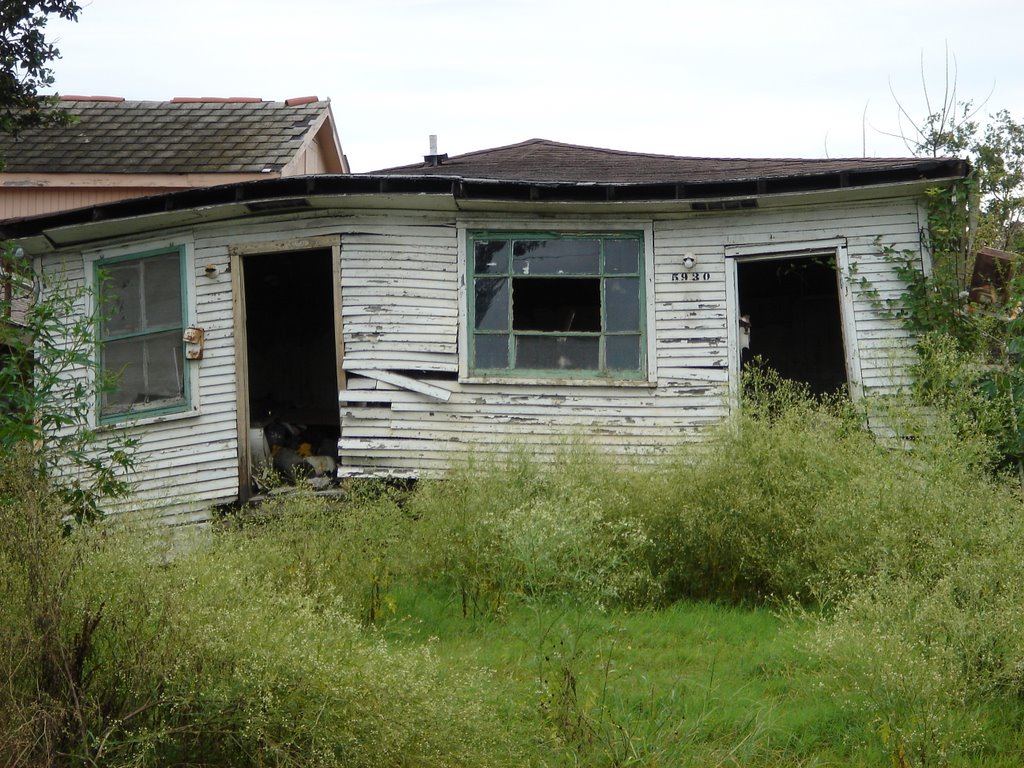
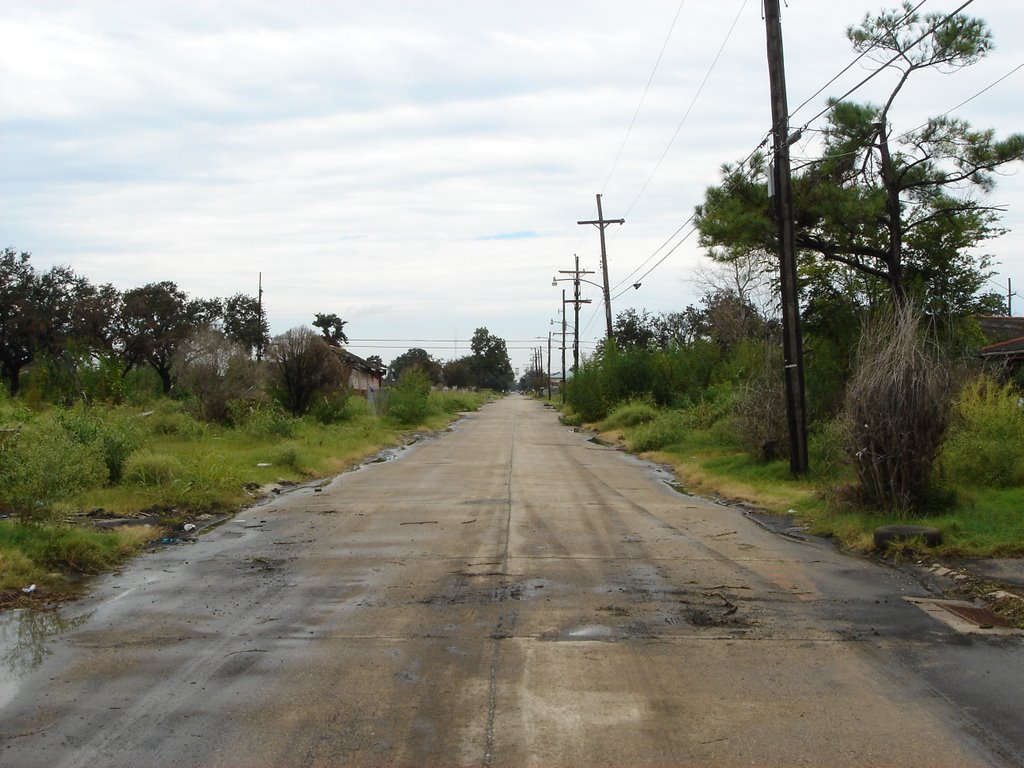
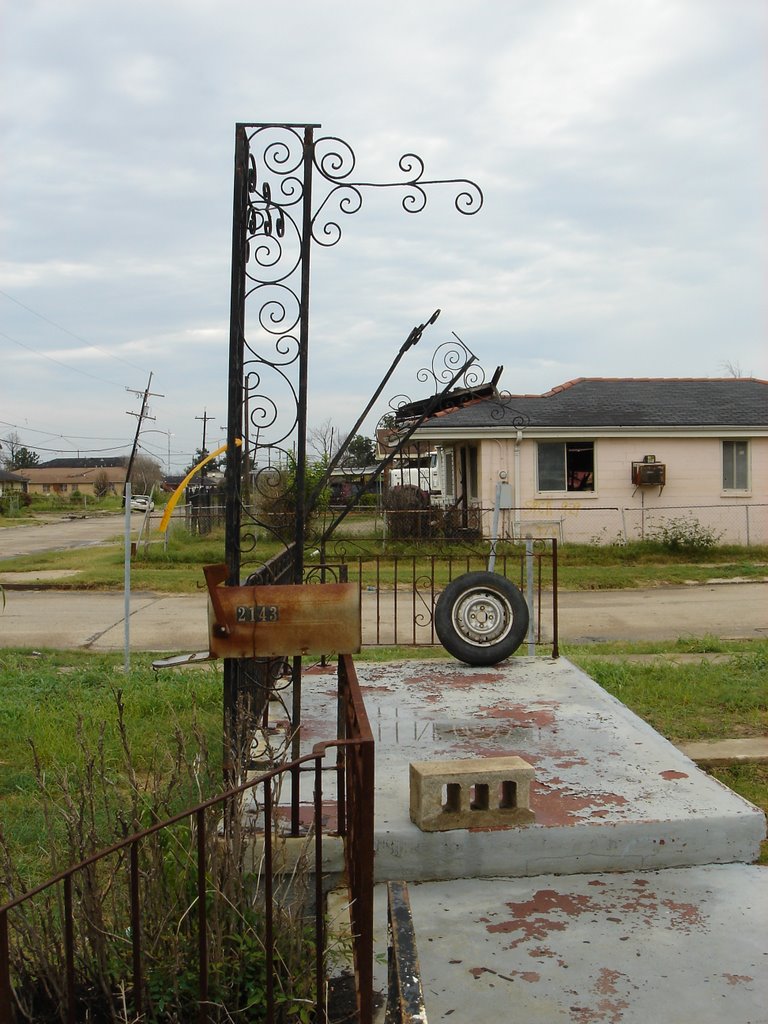
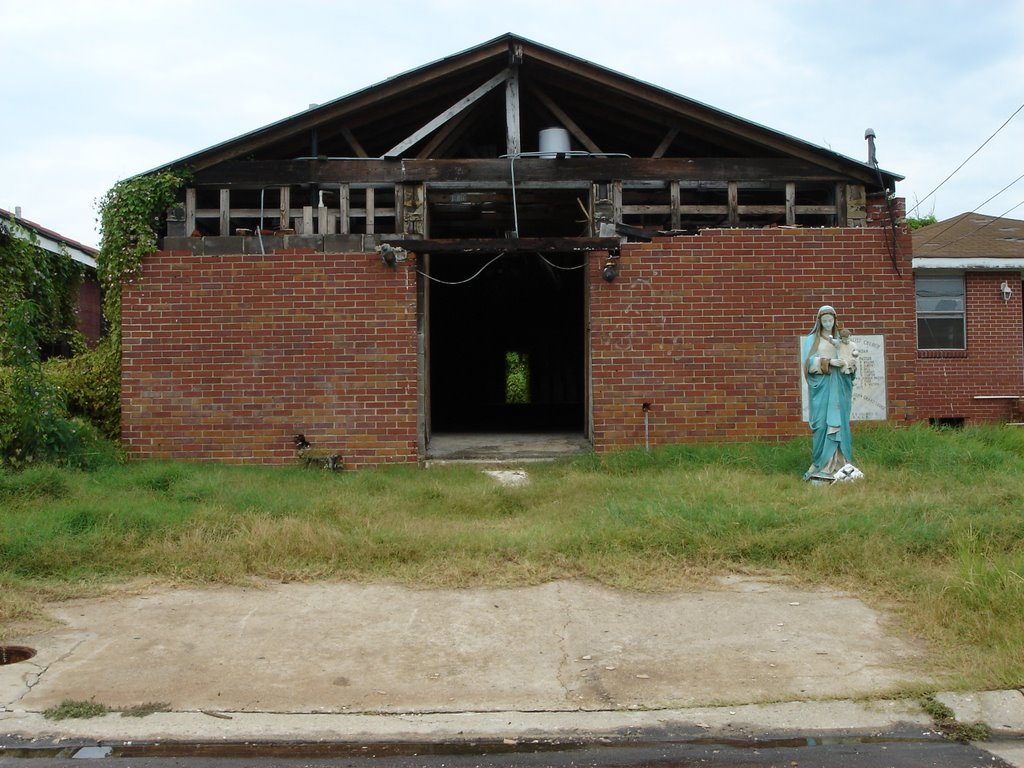
I drove down to New Orleans this weekend, with my little Sony camera. I drove around the city for about two hours taking video, just wanting to get a sense of what the city was really like today.

The good news is that most of the city, especially to the west, looks in good shape. Of course, that means that the video was completely dull, as it only showed rain, windshield wipers, and blurry houses going by.

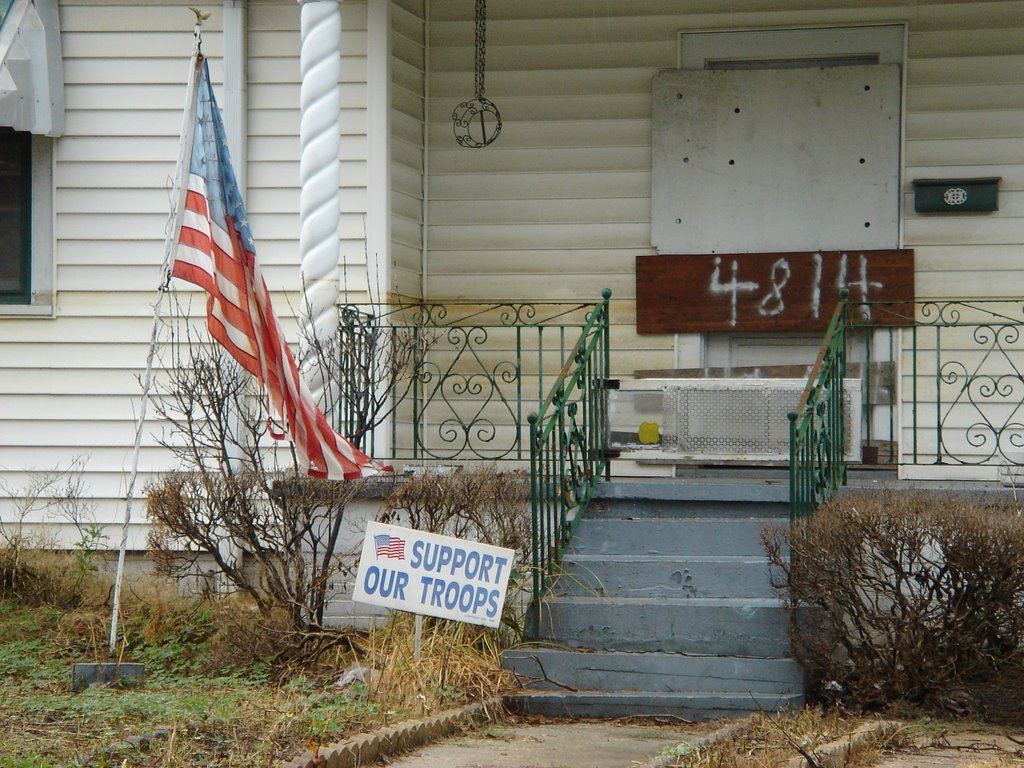
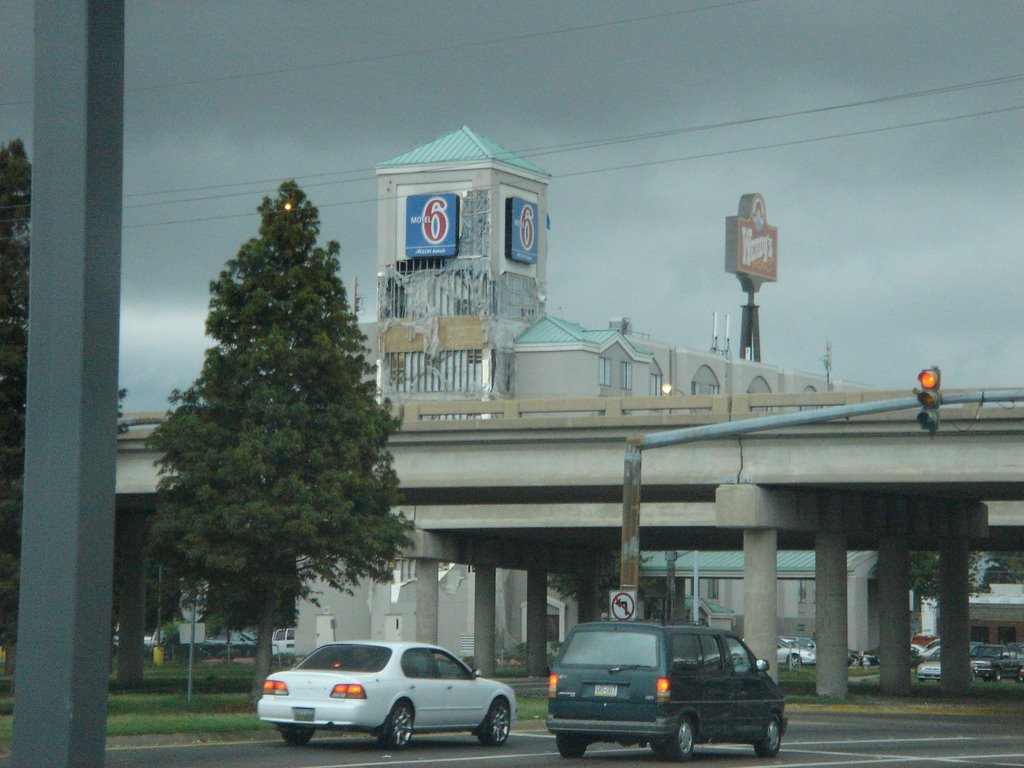
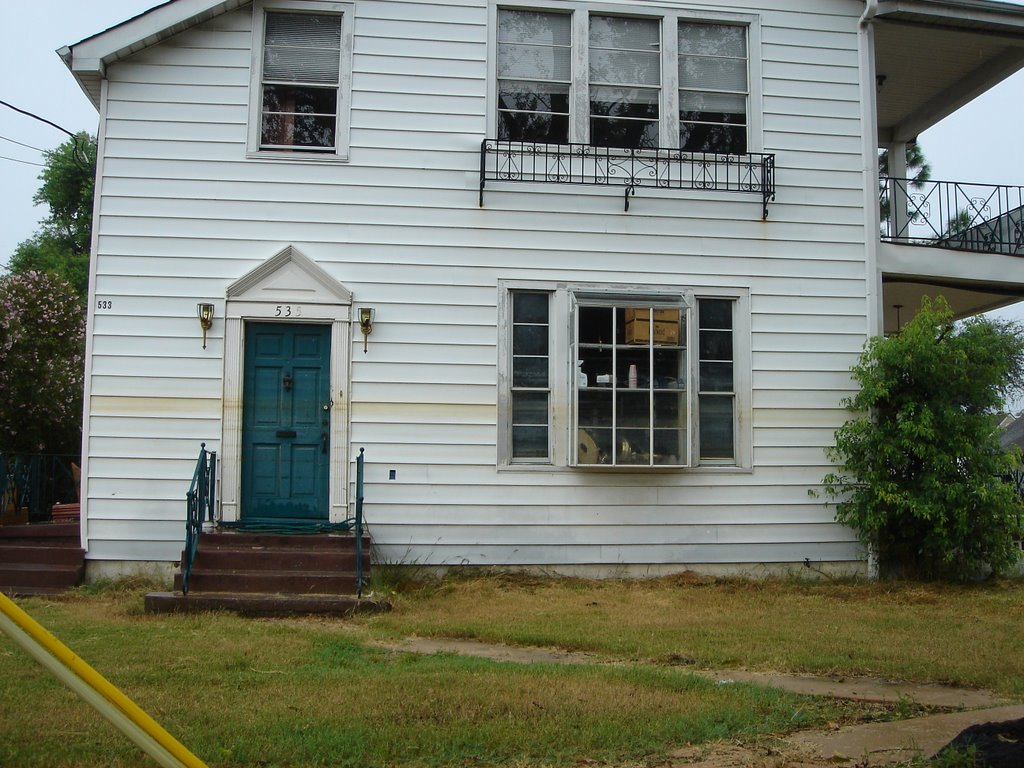
It was different in the east part of the city, and in the areas by the levees that broke. The video below doesn't really do justice, because in most areas things look sort of okay at first glance but much less so on further inspection. Blurry video from a car in the rain mostly only gives you that first glance. In the worst areas, I was able to slow down or stop, zoom in, and sometimes take photographs that give you a better picture of what it looks like.

I'll let the rest of this speak for itself.

My motel by Louis Armstrong Airport


Chef Menteur Avenue (Northeast New Orleans)


Franklin Avenue (Eastern New Orleans)


Community resentment on St. Claude Avenue (bordering Lower 9th Ward)


Lower 9th Ward (southwest end)


Lower 9th Ward (northwest end)


Lower 9th Ward (northwest end) - On foot


More photos (click to enlarge):


Friday, September 08, 2006

Circling the rim

So much to write, not because it is ready but because it overflows and will be lost. Warm soda volcanoing erupting on ice, spilling. Ice cream overhangs shading cone-sides, creaking.

Circling the rim, I gather up the following:

==============================

"There are people who don’t believe that art has any purpose in a war-torn world, but I suspect that the same people don’t believe it has any purpose on a peaceful world – except as a luxury item. When I think of Glyndebourne Opera, I think of how they put on a new opera, straight after the Second World War, as a reminder of what civilisation and culture actually mean. We hear a lot about fighting for civilisation and culture – strangely enough from the same people who have no time for art. Maybe one day they will join the dots…

...

Oh and listen to the proms and read a few poems. You will be arming your mind instead of arming the world. Me, I am going to do more of everything I love, and do it consciously, not least because time feels short and precious. Or as Mrs Winterson used to say, The Summer is Ended and We Are Not Yet Saved."

========================

"It’s a beautiful day, and there will be many days like this, I hope you are reading this on a day that shines. I love the sun more and more as I get older. I used to long for rain when I was younger, perhaps because it suited my solitary and romantic inclinations. It is true that I am still solitary and romantic, but I find that a spray can of Factor 30 does not get in the way of my thoughts anymore.

I used to think sunshine was a bit frivolous – now I know it is life.

Changing is good, letting in new sensations, feelings, new ideas, is necessary. I don’t want to slowly calcify, find myself like the inside of a dishwasher pipe – just enough room to let just enough water through. I want to keep the spaces open, and to find a way to make for room for difficult beauty – is beauty ever easy? I have not found it so. I’m not even talking about a person, just openness to everything, and even the small daily things, like going out into the garden, or walking down to the river, are beautiful enough to disturb.

Disturb? Yes, I mean to disturb out of the habit of letting life pass in a blur. Looking, hearing, feeling, is disturbing. But better, I think than a muffled world.

I put up a poem this month that seems to me to be about the essential practicality of the poetic vision. You don’t need to be a poet to have a poetic vision. A poetic vision is prepared to be open, to let things in. The exactness of translation, vision into language, is the job of a poet, but the vision itself is probably the job of all of us.

We are grateful to poets because they put into words what we have felt/are feeling. I can’t say enough how important it is to go on feeling.

This month’s poem makes the poet and his poem a thing of practical application. I have never believed that poetry is disconnected from the real world, or is a pretty adjunct to it.

I believe that poetry is a user’s manual – a way of defining what things matter, and, as Coleridge put it, ‘keeping the heart alive to love and beauty.’

Poetry is there when we need it, and we need it regularly. Simply, it turns ordinary life into a meditation, and it reminds us that meditation – the ability to settle and focus and concentrate our energies, is a necessary part of ordinary life.

The whiz-faster, flick-through, hurry-past, phone-in-one-hand-sandwich-in-the-other-got-no-time-for-anything in life is not life, which is why poetry rebukes it. Poetry is slow enough for breathing and blood flow. It prevents cardiac arrest, calcification, and is even good for the common cold."

==========================

Me, I'm trying to decide what to do this weekend, and I have about 2 hours to use the wisdom above to guide me. We'll see.

Monday, September 04, 2006

Safe and sound

Just a quick Hello to let everyone know that I'm back safe and sound. If I can find the special little gray USB cable then I will upload some pictures and videos from Spain, but for now it's on with the clothes washing and picking up the mail... oh the joys of returning from vacation.

Annette is well and lovely as always. Her next visit is six weeks.

Wednesday, August 23, 2006

Kaki King

Okay, I assume all of you know about khaki king (close enough I can't be bothered to add new words to the dictionary right now)... and that she has a new album now that came out the same day as Reprieve.

Anyway, I was just checking out her web site... she is on MySpace right now... and it turns out she does blogs on there

Blah blah blah anyway just read this

Sayonara

Well for a little while anyway... it's Wednesday night right now, and Thursday night it can be the last for quite awhile... almost 2 weeks.

I'll be flying out to London on Friday evening and on to Barcelona on Monday. Annette and I will be in Spain until Labor Day weekend which will be spent back in London. I'll be back hopefully with stories and pictures on Labor Day.

Monday, August 21, 2006

Watched pot

Speaking only for myself, I find that contemplating things -- whether one's own emotions or grand questions about the world -- has a lot to do with perspective. What I mean is,

It isn't so much that we got closer as that her face just got bigger and by the time it was taking up my whole view I figured my face had gotten bigger too

, there is a cost to transitioning between different states of mind. I guess in a way that is the point of meditation.

I don't need to tell you what this is about you just start on the inside and work your way out

Or perhaps it is better to say, or more accurate to say, that it is a question of focus. There is a difference between seeing and seeing... between hearing and listening... as we focus the blurry curves come into sharp jagged relief. Was today a good day or a bad day for me, for the world? The market was up, but actually it was up and down and up and down and up. Hitting refresh on the stock quotes is surfing the black-and-white pawns of the cable network O. J. JonBenet Osama bin Hussein tipping turning point men.

Maybe the point is the closer you are the more you see the less you see.

Maybe the point is you have to step back from yourself from the world from your hopes from your fears to see things clearly.

Or maybe -- this is what I thought at work earlier -- time is more precious than we think, and as we realize this we become more selective about the quality of how that time is spent.

If you don't have a point to make don't sweat it you make a sharp one being so kind.

And I'd sure appreciate it.

I wanted to quote something from a book that I have but it turns out that it's the wrong book and I can't find the quote now. What it was about was being realistic about how much time you have in the day, but you may think you have a lot the once you add up all the little things there isn't a whole lot of time left.

I don't think that's really the point, or least interesting one.

I talked to Tyson recently about the way we consume art and entertainment, sort of similar to what Angela was saying. And having quite a lot of free time on my hands here in Houston, I think a lot about how best to spend it.

And I also think back to discussions that I had with Katherine about balancing taking things in (for example reading) and producing things.

And in the context of blogging, I wonder if in an attempt to be constantly producing content, we fall prey to the same phenomenon at work in the news business... allowing the agenda to be dictated by the government and Hollywood.

Last night, I watched "All the Real Girls". It reminded me in a way of "Ruby in Paradise", one of my favorite films of all time. There is something that I love about films that aren't about anything. Not in a Seinfeld sort of way, but in a everyday life sort of way. Ghost World is another example. There's probably a sub genre name for this,...

In the past week a couple of times I've just stopped. Pulled into a parking lot, got out of the car, and just watched people. If you tune into it, the highs and lows of everyday life are a roller coaster.

Maybe we need the roller coaster, but we want it at a safe distance where we can get off whenever we want.

I don't know, I really don't. I think what I find the strangest of all, though, is thinking about Mary and MaryEtta, and about the simple contemplation of everyday beauty. That and its apparent contrast with the television echo chamber. That's not the strange part; I've always thought of that distinction as a distinction between the essential beauty of nature and the alienation of mankind from it. But living in the city, I can't help but look at the people scurrying around as much the same as the birds and squirrels and the cars and the steel and glass. Ugly, dramatic, glorious, simple. As David would say, man is nature.

And if that is so, how do you square the asphalt jungle with the Orwellian bread and Circus?

Oh the title, didn't really work that in. Arcade Fire. If you stare at something it gets bigger and bigger, but it doesn't go away when you stop looking. What are we supposed to look at? What we supposed to think about?

That's what I'm thinking about anyway.

Wednesday, August 16, 2006

Snap!

Random stuff today.

Every town I've lived in has left me with something that I miss once I move away. I have found myself wondering what it is that I will miss about Houston when I'm gone.

One is easy. Walking across the street into the grocery store, eating little samples of grapes, tomatoes, pineapple, pretzels, bread, and then walking out with a new kind of apple that I've never heard of before, a couple peaches, a big juicy tomato like I used to eat when I was a kid, some "alternative" bread that is overpriced but taste so good that I finally have to give in and buy some, a couple of bell peppers, some nice fizzy water, and a bag of ginger snaps.

What is better than ginger snaps? It is the small things in life, the small wonderful things, that make up for everything else.

Cease-fire in Israel and Lebanon... so now we can talk about immigration!

So here's the thing about immigration. There are two or three different issues mixed in together, and the lack of clarity about them means that far too much of our public discourse is based on emotional reactions rather than honest dialogue.

Let's see if we can list the issues. Or if I can.

Culture. Increasingly, the United States is becoming more Hispanic. There are more signs in Spanish, there is more Mexican food, more Latin music, etc. This cultural shift, like the rock 'n roll of our parents' generation, is something new/challenging/threatening depending on your perspective. I think the language is the main threatening part, since the dominant cultural shift before that was the hip-hop/rap black urban culture of the 80s and 90s that, while prompting some outcry against violence/sexism etc., rarely seems to have such a sharp political edge. For some people, this sense of not being able to understand what people around them are saying, or what the signs on the wall say, makes them feel that the places they have considered home are no longer "theirs".

The cultural question is probably the most difficult one, in the sense that it is difficult to imagine a practical scenario where the cultural shift described above can be avoided while this country remains committed to the public virtues it espouses. In that sense, there truly is no going back.

I think that this is the fundamental issue driving the passions and politics of the immigration debate. Because there is no "solution" to the issue, to other issues (one appealing to the left, another appealing to the right) become "cover issues" for the discussion. To be fair, some people genuinely are concerned mainly with these issues, and not the cultural one. Many others (I believe the majority) raise these issues not because they are concerned about them, but rather because they want to fight the cultural changes or -- interestingly enough -- because they want to embrace the cultural changes and feel that solving the cover issues will remove this socially acceptable excuses/reasons for opposing immigration.

I'm getting a bit ahead of myself, but I also think that this is the reason why immigration will prove such a difficult issue to address to everyone's satisfaction: because some people see problems and want to fix them, while others see the same problems as a convenient excuse for opposing immigration in general (and thus have no real desire to address the identified problems). Like in the Sudan (another post), if both sides don't really want to solve the problem, there's generally no solution.

The Cover Issues

Law and Order. As someone who has been through the immigration process, and has seen friends and loved ones do the same, it is undeniably frustrating to think of people who play by the rules and do without economic opportunities and suffer personal hardships while others cut in line. Speaking for myself, I get very frustrated when cars on the road drive down the shoulder to cut in ahead of others, and having lived in Britain only reinforced the sense of fair play that it is just not appropriate to feel that you are entitled to something that others have to wait for. The other example that seems emotionally relevant, though less obviously logically so, is remembering back in college spending all weekend working on a particularly difficult homework assignment, only to come in on Monday and find other people didn't do it because it was "too hard." ... and then the professor saying "oh, all right then, you can turn again on Wednesday." Stating it that way, a logical connection is more clear to me now: the existing immigration process may be terribly unfair, overly burdensome, etc., but there are people who are not in the United States and want to be (and in a fairer system they would be), and it is not fair to them that others get to live and work in the United States while they suffer. If we say that that is okay, we are basically saying that the people who wait in line, fill out the forms, wait patiently and suffer in silence are a bunch of suckers. In my ethical system that is wrong.

The compromise position on the "Law and Order" issue is to define a process of legalization. The tough part is that the "facts on the ground" are such that having everybody leave and stand in line (perhaps for some time) is unrealistic. It asks them to give up existing jobs, family relationships, housing, etc.. The cost is steep. The benefit -- legalization -- is only as valuable as the illegal immigrant views it to be. Presumably by virtue of the illegal status, legalization in and of itself will not be sufficient. Thus either the process must get easier or the penalties for illegal status must be harsher (not the penalties on the books, just the practical impact of illegal status in day-to-day life). If somebody wants to solve this problem, they would probably need to increase (significantly) the limits on legal immigration, improve how the immigration process handles the kinds of situations that drive illegal immigration (economic opportunities -- see below, family connections), and significantly increase enforcement of existing immigration laws especially targeting employers (as there is an economic incentive for employers to hire illegal workers).

This kind of package -- which could be characterized as immigration reform plus legalization plus stronger enforcement -- could address the way legal immigrants and employers of legal workers are currently treated unfairly, while addressing the needs/motivations of those currently living and working illegally in United States. The cost of this package would be forgiveness for those who jumped in line, and acknowledgment/acceptance of the existing pool of mostly low skilled workers currently working here illegally. Which leads us to...

Union Busting. Economics is all about supply and demand. Employers would like to hire workers at the cheapest rate possible. The cheapest rate can be obtained when there are more workers, especially if many of those workers cannot effectively negotiate as a group. In the past, white unions in the north were busted by bringing in nonunion "scab" black workers from the south, relying on the assumption that racism/perceived threat on the part of the white unions against their black coworkers would be sufficient to prevent those unions from absorbing the black workers. Again, the cover issue is one of numbers... as long as you can import more cheap labor, the existing labor will consider the new workers to be a threat to their standard of living. Yes, bringing those new workers into the union would dissipate most of the threat, but as these workers also represent a cultural threat, it is much easier to hope they will just go away. And thus is a union busted. Similarly, lots of jobs removed from the unionized north to the nonunion south. For the political left (especially union workers), the influx of foreign workers represent an economic threat. This is true even where the workers are not illegal (unions oppose the granting of H1B visas to skilled foreign computer workers). The influx of illegal non-Anglo Spanish-speaking foreign workers by the millions represents a real and tangible economic threat to the unions and their members.

The compromise position on the "Union Busting" issue is not obvious. If all the illegal foreign workers were kicked out, the economy would shrink. That doesn't mean there would be a depression, and it doesn't mean that the standard of living for blue-collar workers would go down. It would probably go up. But the "general welfare" would go down. If that is true, then the presence of millions of illegal low-wage workers in America is benefiting everyone except the people they are in competition for jobs with. If that is true, an "open borders" tax could be imposed that would capture some of the economic benefit, and be redistributed in a manner to be defined to workers in the kinds of jobs that are impacted. For example, the money could be used to extend unemployment benefits and provide education credits. That is not to say that the net impact can be made positive for workers in affected industries. It probably cannot, and thus it is unlikely that even such a program would be acceptable. Perhaps it was combined with greater union protections, safety regulations, and other government policies that are viewed as pro-worker, maybe then it would be palatable.

Thus, the Labor left and the Law and Order right have legitimate grievances against the current system, and against any solution that merely ratifies status quo and thereby encourages more of the same. Honest politicians, seeking to solve problems, would look at the needs of Business for the millions of workers currently employed, the needs of Labor for protection of the wages and conditions of workers, the needs of the country for an immigration system that rewards and encourages lawful behavior and respect for process, and the desires of the millions of foreigners to be with their families and to have a decent life, and looking at all of these needs would define an immigration system and workplace regulation scheme that supplies workers legally to businesses on terms favorable to existing legal workers; a stronger social safety net and greater economic hands up to existing low-wage workers; serious enforcement and penalties on employers and employees found to be violating the economic privileges being offered to each; and acceptance of existing illegal workers conditioned on practical legalization steps that acknowledge the mistrust and fragile economic conditions of many migrant workers and their families.

Congratulations if you've read this far. If it were possible to put together such a package, it would be interesting to see where people would come down. Personally I don't think such a package is something that can be put together at this stage in our political dialogue. More likely, individual proposals will come out from those trying to court either the Hispanic lobby or the Business lobby, which will attempt to address either the Law and Order issue or the Union Busting issue (not both). When these proposals come out, it will be understandable and right for those concerned with the opposite issue to object that the solution is incomplete. What will be more interesting is to see the splits that arise between those who wants to solve that particular problem, and those who want a polite way to say there are too many people speaking Spanish in America.

I do expect to see quite a lot of this, not because most politicians are interested in solving problems, but rather because the whole immigration (or illegal immigration) issue has become something of a coded discussion about our attitudes towards culture, work, and trade.

Finally, in the spirit of the Iraq tough choices blog, here are some questions you can ask those with simplistic positions on immigration:

If you are upset about the illegal nature of our immigrant population, if someone told you (truthfully) that everyone here had actually come in legally, would that address your concerns? Is it really how these immigrants got here, or who they are, that troubles you?

If you are upset about the impact of extra workers on the wages of American workers, are you willing to pay more for your house, your yard work, your cleaning, and any other "low skill" work that you purchase? Do you have similar objections to purchasing goods made with low-wage labor overseas? What moral basis makes workers seeking jobs from Alaska, Hawaii, Puerto Rico, Maine, Nebraska entitled to the jobs, while those workers in Canada and Baja California don't matter? Is there anything more noble than "I got mine, I don't want to share with you" at work?

If it is the increasing presence of Spanish culture in America that troubles you, how do you square that with the American mission of taking in immigrant populations from around the world (tired, huddled masses often not initially speaking English)? If you are part-Irish, or Scottish or Jewish or Polish, doesn't your heritage include your own language and your own past discrimination? Given how well-integrated Hispanics are in terms of Christian religion, political moderation, historic ties, aren't they well-suited to American life? And more specifically, if it is the Spanish language that is culturally threatening, do you think it is a good thing that given the America's power and visibility in the world that Americans are famously unable to understand other countries, cultures, and languages?

Anyway, that's what I think about immigration.

Especially Swedish immigration... I want an illegal Swedish immigrant to come live with me and make the fresh ginger snaps every morning. In the meantime, I'll just walk over to the grocery store and enjoy something about Houston, Texas.

Tuesday, August 01, 2006

Persecution complex


Meanwhile, all's well in Houston.